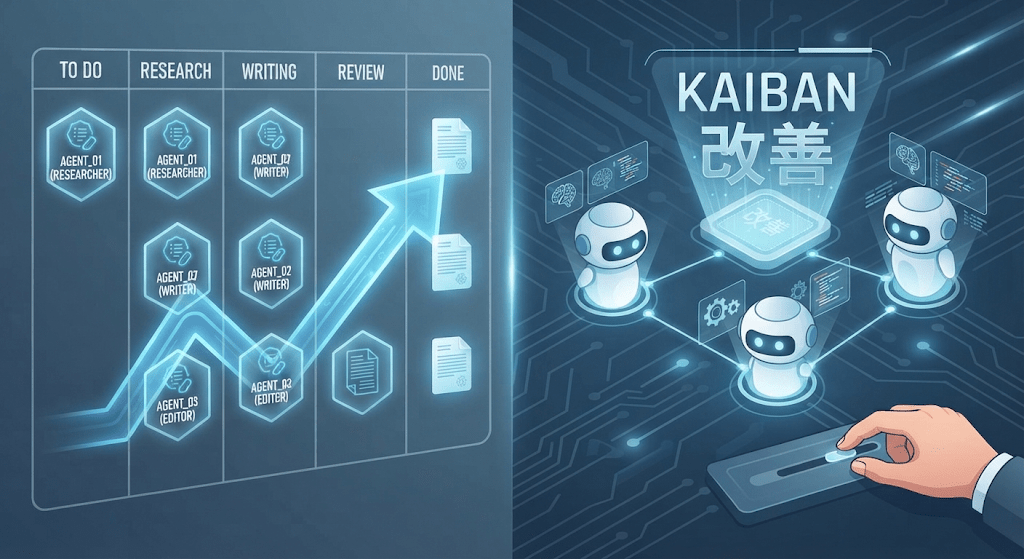
Have you ever felt like wrangling multiple AI agents is a bit like herding digital cats? Between overlapping prompts, silent errors, and opaque decision-making loops, managing complex autonomous workflows can easily turn into a headache.
Enter Keibann—a game-changing approach that bridges the gap between structured project management and multi-agent AI automation. By combining the intuitive nature of classic Kanban boards with cutting-edge JavaScript agent frameworks, Kaiban brings total transparency to how AI teams operate.
Let’s dive into how this framework is reshaping modern development and why you should care.
What is Kaiban and How Does It Work?
At its core, Kaiban (often experienced through tools like KaibanJS and the Kaiban Board) is designed to solve a very modern problem: orchestrating cooperative AI agents without losing your mind. Instead of running scripts blindly in a terminal, Kaiban introduces a visual interface where AI tasks move through stages just like sticky notes on a physical board.
- Visual Transparency: Watch your AI agents pick up, process, and complete tasks in real time.
- Structured Delegation: Assign specific roles, tools, and goals to individual agents within a unified team.
- JavaScript-Native Power: Built smoothly for web ecosystems, allowing developers to orchestrate workflows directly in JS environments.
The Power of Agentic Kanban Boards
Traditional project management boards track human work, but an agentic Kanban board goes a step further. When an AI task card shifts into a specific column, it can automatically trigger logic loops, data scraping, or content generation chains.
This explicit queue management stops agents from stepping on each other’s toes. They process tasks sequentially or collaboratively based on strict priority settings, drastically reducing hallucinations and execution errors.
Why Developers Are Switching to KaibanJS
If you have spent any time building automated pipelines, you know Python has historically dominated the AI landscape. However, KaibanJS flips the script by bringing robust multi-agent orchestration straight to JavaScript and TypeScript developers.
- Seamless Integration: Easily plug multi-agent systems into existing web apps and modern tech stacks.
- Autonomous Collaboration: Set up teams where a “Researcher” agent hands off data to a “Writer” agent, who then passes drafts to an “Editor” agent seamlessly.
- Local-First Testing:Build, visualize, and debug your agent teams locally before pushing them live with a single click.
Frequently Asked Questions
What is the main difference between Kanban and Kaiban?
While traditional Kanban is a visual workflow framework used by human teams to manage physical or digital tasks, Kaiban adapts those principles specifically for AI agent orchestration, allowing visual tracking and execution of autonomous machine tasks.
Do I need to know Python to use Kaiban?
Not at all! One of the biggest advantages of the Kaiban ecosystem (specifically KaibanJS) is that it is built natively for JavaScript and TypeScript developers.
Can I run Kaiban boards locally?
Yes. You can easily set up, visualize, and test your multi-agent workflows locally on your machine before deploying them to production environments.
Conclusion
Managing multi-agent systems no longer has to feel like flying blind. By leveraging Kaiban and its visual workflow framework, you gain absolute clarity, control, and efficiency over how your AI teams execute tasks. Whether you are building automated content pipelines or complex data analysis tools, integrating a visual task structure changes everything.
Ready to level up your development stack? Dive deeper into our related guides on multi-agent architecture or check out the official Kaiban documentation to build your very first automated board today!