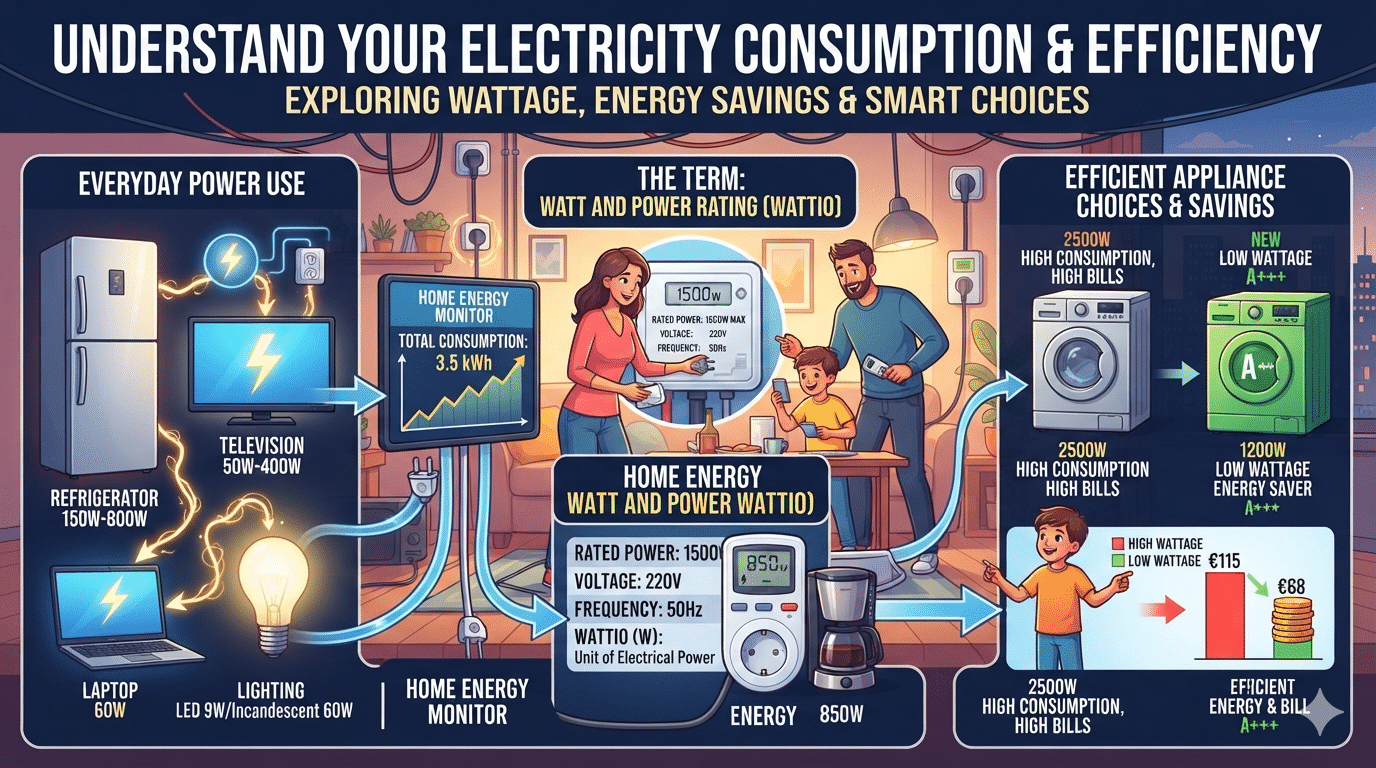
Electricity plays an important role in our everyday lives. We use it for lighting, cooking, cooling, entertainment, and work. However, many people do not understand how much electricity their devices actually consume. This lack of knowledge can lead to higher energy bills and unnecessary power waste. Wattios is a useful term to explore when learning about electrical power, energy consumption, and efficient appliance choices. Understanding watts and power ratings helps people make better decisions before purchasing electrical equipment. It also makes household energy planning easier. From refrigerators to powerful computer systems, every electrical device has different power requirements. Learning how these ratings work can help you control expenses and use electricity wisely.
What Is Wattios?
Wattios is a term commonly associated with watts, the standard unit used to measure electrical power. The Spanish word for watts is vatios, while wattios is an informal spelling sometimes used online. A watt measures how quickly an electrical device uses or transfers energy. This measurement helps people understand the power requirements of different appliances and electronic equipment. For example, a 100-watt light bulb requires more power while operating than a 10-watt LED bulb. However, total electricity consumption also depends on operating time. Understanding Wattios can therefore help consumers compare products, estimate energy requirements, and develop better electricity habits. It is important to distinguish this general energy-related term from a specific commercial product. The available descriptions do not establish a verified company or official platform named Wattios.
Understanding Watts and Electrical Power
Wattios are one of the most important measurements in electrical systems. They describe the rate at which electrical energy is consumed or transferred. Every appliance has different power requirements depending on its design and purpose. Small electronic devices usually require fewer watts than large household appliances. For example, a phone charger might use approximately 5 to 30 watts. An electric kettle may require 1,500 to 2,500 watts while heating water. These differences help explain why electrical products have different power ratings. Understanding these measurements makes appliance comparisons easier. It also helps homeowners estimate electrical demand before purchasing new equipment. When people understand power ratings, they can make informed decisions instead of relying entirely on product prices or advertisements.
How to Calculate Wattios Using Voltage and Current
Calculating electrical power is easier than many people expect. You only need to understand voltage, current, and their relationship. Voltage measures electrical pressure, while current measures the flow of electric charge. In a direct current system, you can calculate power by multiplying voltage by current. The basic formula is:
For example, imagine a device operating at 12 volts and drawing 2 amperes. Its power consumption equals 24 watts. The calculation is simple: 12 × 2 = 24 watts. For alternating current systems, the calculation may also require the power factor. This factor helps determine actual active power. Understanding these formulas is useful when checking electrical equipment, planning installations, and estimating power requirements. Always follow electrical safety guidelines when measuring live circuits.
Complete Wattios and Appliance Power Consumption Table
Different appliances require different amounts of electricity. Their actual consumption depends on their power ratings and daily operating hours. The following table provides general examples for common household equipment. These figures are estimates, not fixed values for every model.
| Electrical Appliance | Estimated Power Rating | Typical Usage |
|---|---|---|
| LED Bulb | 5–15 W | Lighting |
| Ceiling Fan | 40–80 W | Air circulation |
| Television | 50–150 W | Entertainment |
| Laptop | 30–100 W | Work and study |
| Desktop Computer | 150–500 W | Computing |
| Refrigerator | 100–300 W | Food storage |
| Washing Machine | 400–2,000 W | Laundry |
| Electric Kettle | 1,500–2,500 W | Heating water |
| Microwave Oven | 700–1,500 W | Cooking |
| Air Conditioner | 700–2,500 W | Cooling |
| Water Heater | 1,500–4,500 W | Heating water |
| Phone Charger | 5–30 W | Charging |
These ratings provide a starting point for comparing electrical equipment. Actual electricity consumption can differ because of product efficiency, operating settings, and usage patterns. Refrigerators, for example, cycle their compressors instead of running continuously at full power. Air conditioners also change their output depending on room temperature and selected settings. Therefore, buyers should check manufacturer specifications and energy labels before making final decisions.
Difference Between Watts and Kilowatt-Hours
Many people confuse watts with kilowatt-hours when reading electricity bills. However, these measurements describe different things. Watts measure the rate of electrical power consumption. Kilowatt-hours measure the amount of energy used over time. One kilowatt equals 1,000 watts. If a 1,000-watt appliance operates for one hour, it consumes one kilowatt-hour. This is the standard energy measurement used by many electricity providers. Understanding this difference makes monthly bill calculations easier. It also helps homeowners compare appliances with different power ratings. A device with a high wattage does not always create the highest electricity cost. Its operating time matters just as much as its power requirement.
How to Calculate Electricity Consumption and Costs
Calculating electricity costs can help you understand where your money goes. First, check the appliance’s average power consumption. Next, multiply its wattage by the number of operating hours. Divide the result by 1,000 to convert watt-hours into kilowatt-hours. Finally, multiply the result by your electricity price per kilowatt-hour.
Electricity Cost Formula:
Energy Consumption = (Watts × Hours) ÷ 1,000
Electricity Cost = Energy Consumption × Electricity Rate
For example, imagine a 100-watt device operates for 10 hours daily. Its daily consumption equals one kilowatt-hour. Over 30 days, it uses approximately 30 kilowatt-hours. If electricity costs $0.15 per kilowatt-hour, the monthly expense equals $4.50. Actual bills may include additional charges, taxes, and fixed fees. This simple calculation helps families estimate expenses and identify appliances that consume unnecessary electricity.
What Is Energy Efficiency and Why Does It Matter?
Energy efficiency means using less electricity to achieve the same result. An efficient refrigerator can maintain food temperatures while consuming less power. Similarly, LED lighting provides useful brightness with lower electricity requirements. Choosing efficient equipment can reduce operating costs over time. It can also lower household energy demand and reduce environmental impact. However, efficiency should never be judged by wattage alone. Buyers should compare energy labels, annual consumption estimates, product capacity, and performance. An appliance that uses fewer watts might not always provide better results. Consider the appliance’s actual purpose before making a decision. Good energy choices balance performance, purchase price, durability, and electricity consumption.
How Smart Energy Technology Helps Monitor Electricity Use
Modern energy technology offers new ways to understand household electricity consumption. Smart plugs, energy monitors, and connected meters can provide useful information about power usage. Some systems display real-time readings and historical consumption reports. Others allow users to control compatible devices remotely. These features help identify unusual energy patterns and unnecessary usage. For example, a smart plug may show how much electricity a television uses throughout the day. Users can then decide whether changing their habits could reduce waste. Some advanced energy management platforms also advertise artificial intelligence and automated recommendations. However, buyers should verify the availability, compatibility, privacy policies, and independent reviews of any named service before purchasing it. Not every energy monitor provides the same features.
Wattios and the Role of AI in Energy Management
Artificial intelligence is becoming increasingly useful in modern energy management. AI-powered systems can analyze electricity usage patterns and identify possible improvements. For example, software may compare daily consumption and highlight unusual increases. It may also recommend better operating schedules for compatible appliances. Businesses can use similar technology to monitor equipment across different departments. These insights can make energy planning more organized. However, AI recommendations depend on the quality of available information. Incorrect measurements can produce misleading results. Users should also check whether their monitoring equipment supports accurate device-level readings. Smart technology works best when combined with reliable measurements, regular maintenance, and sensible electricity habits.
How Power Supply Efficiency Affects Electricity Consumption
Computer systems and other electronic equipment use power supplies to distribute electricity. These components convert incoming electrical power into suitable outputs for internal hardware. During this process, some energy becomes heat. This means a power supply does not deliver all incoming electricity to connected components. Efficiency ratings help explain how much electricity is converted successfully. The 80 PLUS certification program includes different efficiency levels, such as Bronze, Silver, Gold, Platinum, and Titanium. Higher certification levels generally indicate better efficiency under specified testing conditions. However, actual performance depends on the power supply model and operating load. Choosing an appropriately sized, efficient power supply can reduce wasted energy and unnecessary heat.
Common Household Appliances That Consume More Electricity
Some household appliances contribute more to electricity bills than others. Air conditioners are important examples, especially in areas with long, hot summers. Refrigerators also deserve attention because they operate throughout the day. Electric water heaters, washing machines, and kitchen equipment can increase consumption too. However, power ratings alone cannot identify the biggest energy users. Daily operating hours and appliance efficiency also matter. A high-power kettle might operate for only a few minutes. Meanwhile, a refrigerator uses electricity repeatedly throughout the day. Understanding these differences helps families prioritize improvements. Check your energy meter, appliance labels, and electricity bills to identify the largest opportunities for savings.
Practical Ways to Reduce Electricity Bills
Reducing electricity expenses does not always require expensive upgrades. Simple daily habits can improve energy efficiency. Switch off lights when leaving empty rooms. Replace older incandescent bulbs with efficient LED alternatives. Avoid leaving unnecessary electronics running overnight. Keep refrigerator doors closed whenever possible. Clean air conditioner filters regularly to support proper airflow. Use washing machines with suitable loads instead of running unnecessary cycles. Set air conditioners to comfortable temperatures rather than extremely low settings. These small changes can make a difference over time. The most effective approach is to understand your household’s energy habits. Track consumption regularly and focus on changes that provide real savings without reducing everyday comfort.
Wattios and Solar Energy Planning
Solar energy is becoming an important option for homeowners and businesses. However, choosing the correct solar system requires careful planning. You first need to understand how much electricity your property consumes. Check appliance ratings, daily operating hours, and monthly electricity bills. This information helps estimate your energy requirements. Solar panels generate electricity during daylight hours, while batteries can store energy for later use. The required system size depends on several factors. These include location, sunlight availability, battery capacity, inverter efficiency, and expected demand. A qualified solar professional can assess these requirements and recommend suitable equipment. Understanding electrical power measurements makes these discussions easier. It also helps prevent unnecessary spending on incorrectly sized systems.
Wattios for Computer Hardware and Data Centers
Computer hardware requires careful power management, especially in professional environments. Servers, graphics cards, processors, storage drives, and cooling systems all contribute to electrical demand. A processor’s thermal design power rating does not represent total computer consumption. Other components also require electricity. Furthermore, actual power demand changes depending on workload. A computer may consume relatively little electricity while idle. Its consumption can increase during demanding tasks. Data centers must consider these differences when planning electrical distribution and backup systems. Power monitoring equipment can help administrators understand real operating requirements. Accurate measurements support better cooling decisions, equipment selection, and electricity budgeting.
Common Mistakes People Make When Understanding Power Ratings
Many consumers make purchasing decisions without checking electrical specifications. One common mistake is assuming that higher wattage always means higher monthly electricity costs. Operating time also affects total consumption. Another mistake is confusing watts with kilowatt-hours. These measurements serve different purposes. Some buyers also focus entirely on the purchase price. They forget to consider long-term electricity expenses. Ignoring appliance maintenance can create additional waste. Dirty filters and blocked ventilation may reduce equipment performance. People sometimes rely on advertised maximum ratings instead of actual operating measurements. Avoiding these mistakes can improve buying decisions. Always compare reliable specifications, expected usage, efficiency ratings, and long-term ownership costs.
Benefits and Limitations of Understanding Wattios
Understanding electrical power measurements offers several practical advantages. Consumers can compare appliances more effectively and estimate electricity expenses. Businesses can improve equipment planning and monitor operating costs. Homeowners can also prepare better solar energy plans. These benefits make electrical knowledge useful for almost everyone. However, power ratings have limitations. They cannot independently predict the exact electricity consumption of every appliance. Actual usage depends on operating conditions, efficiency, maintenance, and time. Smart monitoring systems can provide additional information, but their accuracy varies. Therefore, combine manufacturer specifications with real measurements whenever possible. A balanced approach provides a clearer understanding of energy consumption and supports more reliable decisions.
Future of Smart Energy Management
Energy management technology continues to develop. Modern homes are becoming more connected through smart meters, automated lighting, and intelligent appliances. These technologies can make electricity monitoring easier. Future systems may offer better forecasting, more detailed reporting, and improved integration with renewable energy. Businesses can also benefit from advanced monitoring across larger facilities. However, successful energy management requires more than technology. Reliable equipment, accurate data, and responsible user habits remain essential. Consumers should choose solutions that match their actual needs. They should also consider installation costs, security, maintenance, and compatibility. Combining practical knowledge with useful technology can support a more efficient energy future.
Conclusion: Make Better Energy Decisions With Wattios
Understanding Wattios provides a helpful starting point for learning about electrical power and energy consumption. Watts explain how quickly devices use electricity, while kilowatt-hours show total energy consumption over time. These measurements help people compare appliances, calculate operating costs, and plan household electricity needs. Energy-efficient products and simple daily habits can also reduce unnecessary consumption. Smart meters and connected monitoring systems offer additional insights when properly installed and verified. Whether you manage a home, office, or computer system, understanding electricity is valuable. Start by checking your appliance labels and reviewing your monthly energy usage. Small improvements today can support better financial decisions and more responsible energy use tomorrow.
Frequently Asked Questions About Wattios
1. What does Wattios mean?
Wattios is a term associated with watts, the standard unit of electrical power. It is sometimes confused with the Spanish word vatios. People commonly encounter the term when researching appliance ratings and electricity consumption. It is important to understand that watts measure power, not total energy usage. Electricity consumption over time is measured in kilowatt-hours. Learning this difference helps consumers understand appliance specifications and electricity bills.
2. How many watts are in one kilowatt?
One kilowatt contains exactly 1,000 watts. This conversion is useful when calculating electricity consumption. For example, a 2,000-watt heater has a power rating of two kilowatts. If it operates continuously for one hour, it consumes two kilowatt-hours. Your electricity provider generally uses kilowatt-hours when calculating energy charges. Understanding this conversion makes household electricity calculations easier.
3. How can I calculate the electricity consumption of an appliance?
Multiply the appliance’s wattage by its operating hours. Divide the result by 1,000 to calculate kilowatt-hours. For example, a 200-watt appliance running for five hours consumes one kilowatt-hour. Multiply that amount by your local electricity rate to estimate its energy cost. Remember that actual consumption may change depending on operating conditions and appliance efficiency.
4. Does higher wattage always mean higher electricity bills?
No, higher wattage does not automatically mean higher electricity expenses. Total consumption depends on both power requirements and operating time. A powerful kettle may operate for only a few minutes. A smaller refrigerator operates repeatedly throughout the day. Therefore, compare estimated energy consumption rather than considering wattage alone. This approach provides a more realistic picture of electricity costs.
5. Can smart energy monitoring systems reduce electricity costs?
Smart energy monitoring systems can help users understand where electricity goes. Some devices provide real-time readings and historical reports. Others offer automation and energy-saving suggestions. These features can help identify unnecessary consumption. However, actual savings depend on the equipment, electricity habits, and available features. Monitoring technology provides useful information, but users must take practical steps to reduce waste.
6. Is Wattios an official energy management company or application?
The available information does not independently establish Wattios as an official energy management company or application. Some descriptions present it as a smart energy platform with AI monitoring, connected devices, and automation features. However, these claims require verification through reliable company records, official documentation, and independent product reviews. The term is also used in discussions about watts and electrical power. Always verify a product’s identity and specifications before making a purchase.