Bianca Censori Photos: Decoding the Art, Influence, and Cultural Conversation
The visual narrative of Bianca Censori has become one of the most discussed and dissected in contemporary pop culture. Bianca Censori photos are rarely just casual snapshots; they are carefully constructed statements, blending high fashion, architectural design, and performance art. Emerging from her background as an architectural designer into the relentless global spotlight as Kanye West’s partner, her public image is a curated project that sparks conversations about celebrity, creative expression, and autonomy. This article delves deep into the phenomenon, exploring the artistic intent, the fashion evolution, the media’s role, and the broader cultural implications of every public appearance and captured moment. To understand the Bianca Censori photos is to examine a modern case study in image-making, where personal style becomes a collaborative, and often controversial, public art piece.
The Architectural Foundation of a Public Persona
Before the paparazzi lenses and red carpets, Bianca Censori was trained in the principles of architecture at the University of Melbourne. This foundation is not a trivial footnote; it is the essential blueprint for understanding her sartorial choices. Architectural thinking prioritizes form, structure, material, and the relationship of a body to space. When viewing Bianca Censori photos, one can see these principles in action. Her outfits often resemble wearable sculptures, playing with geometric shapes, structural supports like corsetry and bands, and a minimalist palette that emphasizes silhouette over adornment.
This background moves the conversation about her style beyond simple fashion criticism into the realm of embodied design. Her public appearances can be interpreted as architectural interventions in the urban and media landscape. Whether navigating a sidewalk or posing on a staircase, her presence is calculated to create a specific visual tension with her environment. This transforms mundane paparazzi photos of Bianca Censori into something more akin to a site-specific performance, challenging the traditional boundaries between a person, their clothing, and the space they occupy.
The Yeezy Partnership: From Designer to Muse and Collaborator
Bianca Censori’s role within the Yeezy ecosystem has evolved significantly, moving from a behind-the-scenes architectural designer to the brand’s most visible avatar. Her collaboration with Kanye West is the central engine behind her current public image. West, a longtime provocateur in both music and fashion, has found in Censori a muse who physically embodies his avant-garde, often dystopian, design aesthetic. The resulting Bianca Censori and Kanye West photos are thus collaborative artworks, with Censori as the living canvas and West as the creative director.
This partnership raises fascinating questions about creative agency. Are the striking looks seen in Bianca Censori latest photos a pure expression of her architectural vision, a manifestation of West’s creative direction, or a unique synthesis of both? The evidence suggests a powerful fusion. Her technical understanding of structure and form meets his overarching thematic visions—be it monochromatic uniformity, post-apocalyptic layering, or raw, deconstructed glamour. Together, they produce a cohesive and disruptive visual language that dominates headlines and fuels endless social media discourse.
Deconstructing the Fashion Language: Key Silhouettes and Themes
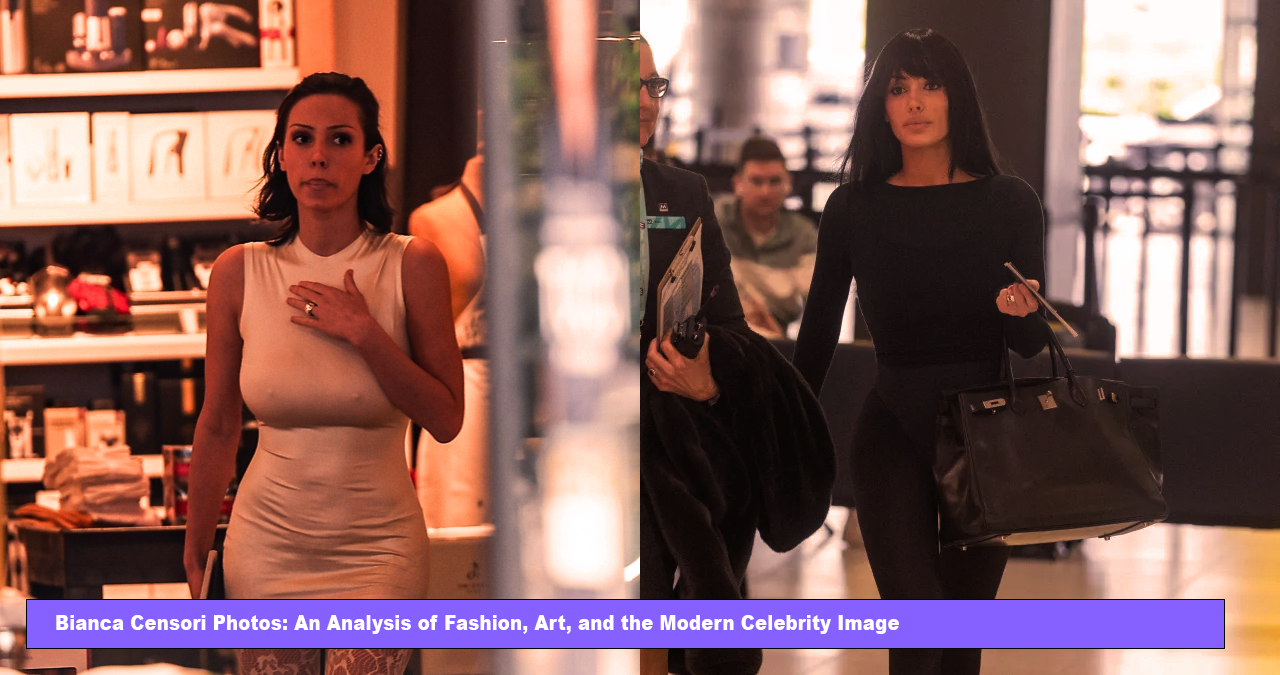
A systematic review of her appearances reveals a recurring vocabulary of shapes and themes. The fashion presented in Bianca Censori photos is not random; it is a lexicon of deliberate choices. Predominant themes include full-body coverage with sheer fabrics, creating a paradox of revelation and concealment. Architectural shapes like sharp shoulders, cylindrical skirts, and intricate strap work define her silhouette, referencing both futuristic concepts and historical couture techniques. The color palette is overwhelmingly neutral, relying on shades of black, white, beige, and gray to focus attention purely on form.
Another persistent theme is the use of clothing as a second skin or a structural exoskeleton. Bodysuits, tights, and seamless knitwear create a unified base, often augmented with hard-sided accessories or wrapping. This approach minimizes the traditional “outfit” feel and maximizes the impression of a singular, designed entity. When analyzing pictures of Bianca Censori, the absence of conventional bags, obvious jewelry, or vibrant prints is striking. Every element is subservient to the overall architectural statement, making her public image a sustained exercise in minimalist, conceptual fashion.
The Paparazzi Phenomenon and the Manufactured Moment
In the age of the celebrity-industrial complex, the paparazzi shot is a primary medium. Bianca Censori paparazzi photos are unique because they often feel staged for the camera, even when captured spontaneously. There is a pervasive sense of awareness and performance. Unlike candid shots of celebrities running errands in sweats, Censori’s street-style appearances are consistently in full, dramatic character. This blurring of lines between a private moment and a public showcase is a key part of the strategy, suggesting that in her world, there is no “off-duty.”
This relationship with the paparazzi is symbiotic and strategic. The photographers get consistently bizarre and buzz-worthy images that guarantee clicks and sales. In turn, Censori and West control a narrative without official press releases or social media posts from their own accounts. Each grainy, long-lens image becomes a direct-to-consumer fashion drop and a talking point. The very nature of these Bianca Censori and Kanye photos—often portraying them as an inscrutable, unified front against a staring world—reinforces their brand of enigmatic, avant-garde celebrity divorced from traditional media circuits.
Public Reception and the Spectrum of Interpretation
The public and media reaction to Bianca Censori photos forms a spectrum ranging from fervent admiration to sharp criticism. Supporters and fashion commentators laud her as a fearless icon of avant-garde design, celebrating her commitment to an artistic vision in the public sphere. They frame her choices as a powerful reclamation of the body as an art object, a deliberate subversion of red-carpet expectations and Hollywood glamour. In this view, every controversial outfit is a successful provocation, challenging mundane fashion norms and expanding the conversation about what wearable art can be.
On the other end of the spectrum, critics voice concerns that the imagery, often orchestrated by her famous partner, veers into objectification and raises complex questions about agency. Sensational tabloid coverage focuses intensely on the revealing nature of some outfits, while more nuanced discussions grapple with the optics of a woman in the orbit of a powerful male artist adopting such a radical and sexualized image. This division highlights the central tension: is the persona seen in Bianca Censori fashion photos an empowered artistic statement or a product of influential co-creation? The debate itself is a testament to the imagery’s potent impact.
The Deliberate Absence of a Digital Footprint
In an era defined by personal branding on Instagram and TikTok, Bianca Censori’s lack of a public social media presence is perhaps her most powerful branding tool. She does not explain, contextualize, or curate a behind-the-scenes narrative for her public image. There is no “get ready with me” video or tweet clarifying her intentions. This silence forces the world to engage solely with the photos of Bianca Censori as they are presented—as pure, un-narrated visual data. This absence amplifies the mystery and the architectural purity of her persona; the art is left to speak for itself, however loudly or strangely it may do so.
This strategy inverts the modern celebrity playbook. Instead of fostering parasocial connection through shared intimacies, it cultivates distance and iconography. It makes every paparazzi photo or red-carpet snapshot the only source material for public understanding. Consequently, media outlets and fans are left to analyze and project meaning onto these images without guideposts, fueling even more discussion and speculation. The lack of a digital footprint makes the physical, photographed moments the entire canon, elevating their importance and enigmatic power.
Cultural Impact and Influence on Fashion Trends
Despite—or because of—its extreme nature, the aesthetic displayed in Bianca Censori photos has begun to permeate broader fashion currents. The influence is not in direct replication, but in the trickle-down of specific ideas. We see this in the mainstream embrace of monolithic dressing (head-to-toe single color), the renewed interest in structural undergarments and corsetry as outerwear, and the popularity of sheer, layered fabrics. Designers and fast-fashion retailers are interpreting these avant-garde concepts into more wearable pieces, demonstrating the pathway from radical spectacle to adapted trend.
Furthermore, her persona challenges the very purpose of celebrity fashion. It moves away from commercial aspiration—the “you can buy this look” ethos—and firmly back toward artistic spectacle. In doing so, it creates a new niche: the celebrity as a walking art installation. This influence reshapes expectations, encouraging onlookers to view public appearances through a lens of performance and concept rather than mere beauty or trend-spotting. The cultural impact of Bianca Censori latest photos thus lies in their power to reframe the function of clothing in the public eye.
Navigating the Complex Discourse on Agency and Choice
Any deep analysis of Bianca Censori and Kanye West photos must contend with the persistent public discourse surrounding her autonomy. This is the most charged and sensitive dimension of her public narrative. Critics point to the rapid transformation of her style after partnering with West, the often physically restrictive nature of the clothing, and West’s documented history of controlling creative visions as causes for concern. They question whether the imagery represents a true partnership or the work of a dominant auteur using a willing collaborator as his primary medium.
Conversely, those defending her agency argue that reducing Censori to a passive muse undermines her intelligence, her architectural expertise, and her stated willingness to participate in a radical artistic project. They emphasize that unconventional choice is still a choice. As fashion critic Alexander Fury noted in a different context, “The most subversive thing a woman in the spotlight can do is to refuse to dress for the male gaze on its own terms.” This quote encapsulates the pro-agency perspective: that the Bianca Censori photos might be a deliberate, shared rejection of conventional expectations, making the gaze itself part of the artwork’s subject.
Heidi Elizabeth Croft: Rising Talent in the Spotlight
The Evolution of a Visual Identity: A Comparative Timeline
To appreciate the curated nature of this project, it is instructive to compare the visual identity before and after her relationship with Kanye West became public. The transformation is not merely a change in clothes but a shift in the fundamental grammar of her public presentation.
| Period & Context | Key Characteristics in Photos | Silhouette & Fabric | Public Perception & Media Framing |
|---|---|---|---|
| Pre-2023 (Professional Era) | Casual, conventional, accessible. Smart streetwear, denim, tailored blazers, simple dresses. | Relaxed, soft fabrics. Recognizable, high-street or designer labels worn traditionally. | Private individual; architectural professional. Minimal media interest. |
| 2023 Onwards (Collaborative Era) | Conceptual, uniform, performative. Monochromatic looks, sheer layers, architectural shapes, face-obscuring accessories. | Structured, sculptural fabrics. Heavy use of hosiery, bodysuits, leather, and custom Yeezy prototypes. | Global celebrity & muse. Subject of intense debate, framed as either “avant-garde icon” or “controlled image.” |
The Future of the Bianca Censori Image
The trajectory of Bianca Censori photos will likely continue to evolve, potentially moving into new phases of creative expression. As the initial shock of the aesthetic normalizes within the media cycle, the collaboration may seek new forms of disruption or subtlety. Potential future directions could include a pivot toward more color, a collaboration with other avant-garde designers outside the Yeezy umbrella, or even a gradual softening that incorporates elements of her earlier, personal style. The longevity of the project depends on its ability to remain dynamic and unpredictable.
Ultimately, her visual legacy may be to permanently alter the template for a celebrity partner. She has demonstrated that the role can be a proactive, creative partnership rather than a supportive sideline. Future figures in similar positions may cite the Bianca Censori phenomenon as a precedent for turning the intense scrutiny of a relationship into a shared, conceptual art platform. Whether applauded or critiqued, her image has carved out a unique space that sits at the potent intersection of fashion, art, architecture, and celebrity culture.
Conclusion
The world of Bianca Censori photos is far more than a series of celebrity snapshots. It is a dense, ongoing text about the nature of modern image-making, creative collaboration, and public performance. From its roots in architectural theory to its execution on global media stages, every appearance is a deliberate data point in a larger project. This analysis reveals a complex interplay between personal agency and partnership, between artistic provocation and media consumption, and between fashion as clothing and fashion as conceptual statement. To engage with these images is to participate in a conversation about all these themes. Whether one sees a liberated artist or a curated canvas, the undeniable truth is that Bianca Censori photos command attention, spark dialogue, and have irrevocably influenced the visual language of contemporary fame.
Frequently Asked Questions
Who is Bianca Censori?
Bianca Censori is an Australian architectural designer who gained global prominence due to her relationship with musician and fashion designer Kanye West. She previously worked for Yeezy and is now widely recognized as West’s partner and muse, known for her radical, architectural style seen in public Bianca Censori photos.
Why are Bianca Censori’s outfits so controversial?
Her outfits, often seen in Bianca Censori paparazzi photos, are controversial because they radically depart from conventional celebrity fashion. Featuring full-body sheers, restrictive silhouettes, and monochromatic uniformity, they are interpreted by some as high art and by others as objectification, sparking debates about agency, creative expression, and the male gaze in fashion.
Does Bianca Censori have social media?
No, Bianca Censori does not maintain any public social media profiles. This intentional absence amplifies the mystery of her persona and forces all public perception to be formed through official appearances and paparazzi-captured Bianca Censori photos, adding to her enigmatic image.
What is Bianca Censori’s background in architecture?
Censori holds a Master’s in Architecture from the University of Melbourne. This background is fundamental to understanding her public style, as it directly influences the sculptural, form-driven, and spatial qualities evident in almost all photos of Bianca Censori, treating her clothing as wearable design and her public appearances as architectural interventions.
How has Bianca Censori influenced fashion trends?
While her exact looks are not widely replicated, the aesthetic in Bianca Censori fashion photos has trickled down, popularizing concepts like monolithic dressing, structural undergarments as outerwear, and a stark, minimalist palette. Her main influence is shifting the perception of celebrity fashion from commercial aspiration toward performance art and conceptual spectacle.