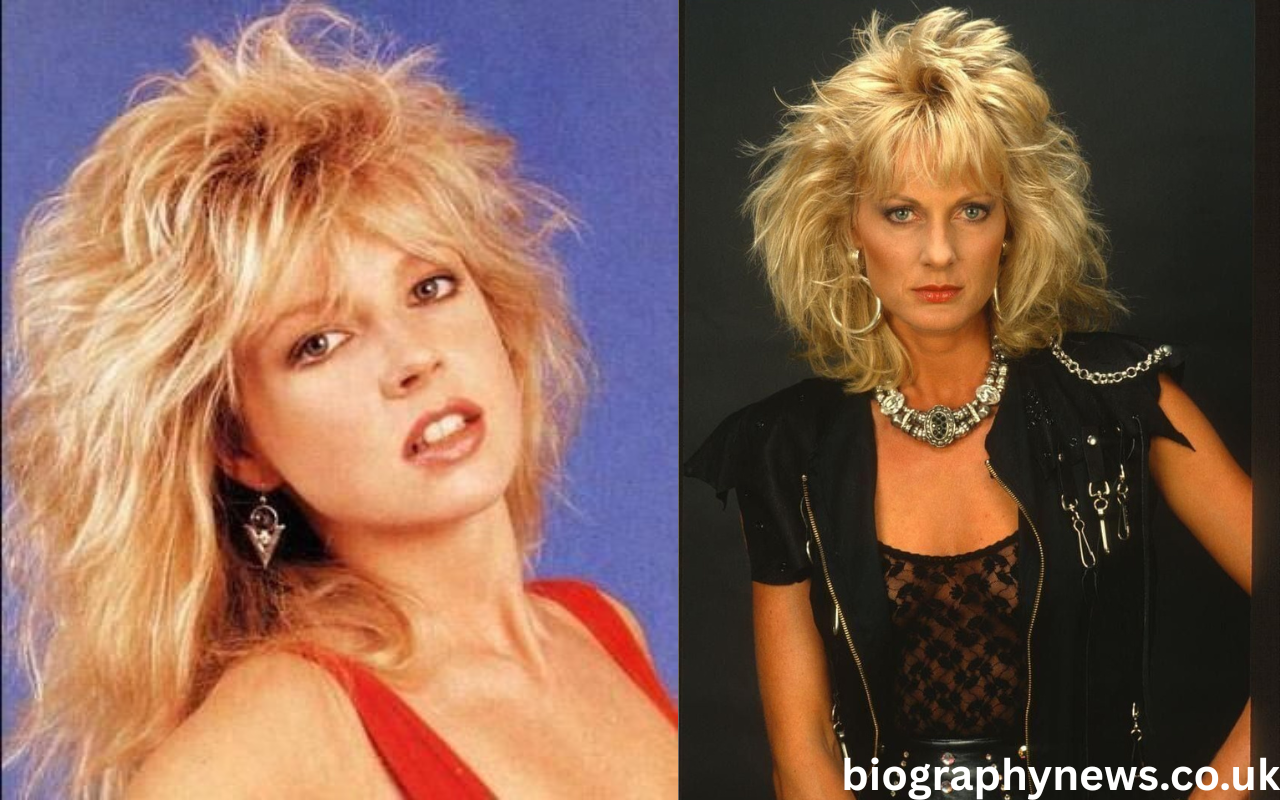
Corinne Russell was born on November 22, 1963, in Bromsgrove, Worcestershire, England. Growing up in the Midlands, she developed an early passion for performance and movement that would later shape her professional life. Unlike many glamour models who entered the industry without formal performance training, Russell had a background rooted in dance and physical expression. From a young age, she trained in dance and gymnastics, disciplines that require dedication, flexibility, and stage confidence. These early experiences gave her both physical agility and a strong sense of presentation.
Her upbringing in England during the 1970s meant she grew up in a culturally vibrant era. British entertainment was expanding rapidly, with music, television, and fashion all evolving at a fast pace. This dynamic environment influenced Russell’s aspirations. She was drawn to the stage and camera, not just as a model but as a performer who could captivate audiences with movement and personality. Her natural charisma and disciplined training set her apart early on.
Before her fame, Russell worked hard to refine her abilities and gain exposure. She understood that success in entertainment required more than appearance; it required adaptability. Her ability to combine glamour with performance would later become the defining trait of her career. These formative years laid the foundation for what would become a multi-layered journey through modelling, television, film, and even early gaming innovation.
Breakthrough as a Page 3 Model
Corinne Russell rose to national attention in the early 1980s as a Page 3 girl in British tabloids. She made her debut appearance in The Sun in August 1982, marking the start of a prolific modelling career. Page 3 at the time was a major cultural feature in the UK, launching the careers of many glamour models. Russell quickly became one of the most recognizable faces of the era due to her striking looks, confident expression, and camera presence.
Over the course of her modelling career, she appeared nearly 200 times across major newspapers, including both The Sun and the Daily Star. This remarkable number of features reflects her popularity and demand during the height of British tabloid glamour culture. Her consistent presence on Page 3 established her as one of the leading glamour models of the 1980s, a decade known for bold fashion, vibrant media, and expanding celebrity culture.
Her success as a Page 3 model was not just about frequency of appearances. It was about impact. Russell represented the classic 1980s glamour aesthetic: confident, bold, and visually captivating. She became part of a generation of British glamour icons who helped define a specific chapter of media history. Her modelling work served as the springboard that allowed her to transition into television, music videos, and film roles.
Television Career and Hill’s Angels Era
While many models remain limited to print, Corinne Russell expanded her career into television. One of her most notable roles was as one of Hill’s Angels on The Benny Hill Show. This popular British comedy program featured choreographed dance segments, and Russell’s dance training made her an ideal fit. As part of the Angel troupe, she performed in energetic routines that combined humor, glamour, and movement.
Television exposure significantly broadened her audience. Unlike still photography, TV demanded dynamic performance skills. Russell’s comfort in front of the camera and her ability to perform choreographed sequences helped her stand out. She became associated not only with glamour modelling but also with variety entertainment. This versatility strengthened her brand in the entertainment industry.
Her television appearances extended beyond one program. She participated in music and entertainment shows during the 1980s, showcasing her dance ability and screen presence. These experiences solidified her identity as a performer rather than simply a model. The combination of dance, comedy, and television variety work made her a familiar face in British households during that era.
Film Roles and Acting Appearances
Corinne Russell also explored opportunities in film during the 1980s. Though many of her roles were supporting or brief, they added another dimension to her career. She appeared in films such as Absolute Beginners and the cult fantasy film Highlander. These projects allowed her to step into cinematic environments that differed from the fast-paced world of tabloid modelling.
Acting in film requires a different skill set from posing for photographs. Russell had to adapt to scripted scenes, character portrayal, and production schedules. Her dance background once again supported her transition, as performers trained in movement often adapt more easily to screen direction. While she did not pursue a long-term acting career, her film appearances remain an interesting part of her professional story.
Her presence in these productions contributed to her wider recognition. Fans of 1980s British and international cinema sometimes discover her work through these roles. Although she was not a leading actress, her participation in notable films helped maintain her visibility during a competitive entertainment decade.
Music Videos and Rock Culture Fame
One of Corinne Russell’s most memorable appearances came through a major rock music video. She featured in AC/DC’s iconic “You Shook Me All Night Long” video, a track that became one of the band’s most famous songs. In the video, Russell appears riding a mechanical bull, a visual that became closely associated with 1980s rock imagery.
Music videos in the 1980s were rapidly gaining importance due to the rise of MTV and global broadcasting. Being featured in a widely viewed rock video meant international exposure. Russell’s appearance connected her to the broader world of rock culture, beyond British tabloids. It positioned her within a global pop culture moment that continues to be revisited decades later.
This appearance also demonstrated her willingness to embrace bold and unconventional roles. The high-energy, edgy aesthetic of the video matched her confident screen presence. It further reinforced her identity as a glamour model who could successfully cross into mainstream music entertainment.
Contribution to Early Video Game Innovation
One of the most fascinating aspects of Corinne Russell’s career is her involvement in early video game development. In 1988, she was associated with the video game Vixen, produced by Martech. Her movements were used to create one of the early examples of motion-captured animation in gaming. At a time when digital graphics were still primitive, this was a significant technical step.
The late 1980s marked a period of experimentation in video game design. Developers were looking for ways to make characters appear more realistic. Russell’s physical performance provided reference material for animators seeking fluid, lifelike movement. This unusual collaboration between glamour modelling and gaming technology highlights the diversity of her career.
Her involvement in Vixen illustrates how entertainment industries were beginning to merge. Print, television, music, film, and gaming were increasingly interconnected. Russell’s participation in this early technological milestone adds an unexpected but important chapter to her professional legacy.
Public Image and Media Attention
Throughout her career, Corinne Russell attracted significant media attention. Glamour models in the 1980s were often the subject of tabloid stories and public curiosity. Her confidence and high-profile appearances made her a recognizable personality beyond her modelling work. Fans followed her television roles, music video features, and media interviews.
The public image she cultivated combined elegance with boldness. She represented a type of glamour that was confident rather than shy. This image resonated strongly with audiences during a decade that celebrated expressive fashion and daring media trends. Her presence in multiple entertainment formats reinforced her popularity.
Like many public figures of the era, she also experienced the pressures that come with visibility. Media coverage sometimes focused on personal anecdotes as much as professional achievements. Nevertheless, her ability to maintain relevance across different platforms showed her resilience and adaptability in a competitive industry.
Cultural Impact in 1980s Britain
The 1980s were a transformative decade in British pop culture, and Corinne Russell was very much part of that transformation. Glamour modelling was at its commercial peak, and television variety shows were still a dominant form of entertainment. Russell’s career intersected with both of these influential cultural movements.
Her nearly 200 Page 3 appearances reflect how prominent she was during that time. Few models achieved such frequency in major publications. This level of exposure cemented her status as a defining face of 1980s glamour. She became part of a visual culture that many people still associate with that decade.
Beyond numbers, her cross-media presence made her stand out. She moved from newspapers to television, from film to music videos, and even into gaming. This diversity mirrored the evolving entertainment landscape of the late twentieth century.
Life After the Spotlight and Lasting Legacy
By the early 1990s, Corinne Russell gradually stepped away from the entertainment spotlight. Like many figures of the 1980s glamour era, her peak years were closely tied to the specific media trends of that time. However, stepping back did not erase her contributions. Her work continues to be discussed by fans of 1980s pop culture and British media history.
Today, her legacy is often revisited through retrospectives about Page 3 models, classic British television, and early music video culture. Collectors, enthusiasts, and pop culture historians remember her as one of the notable glamour icons of her era. Her association with nearly 200 newspaper features and multiple television programs keeps her name relevant in nostalgic discussions.
Corinne Russell’s story is ultimately about versatility. She was not limited to a single role or medium. She explored modelling, dance, acting, music videos, and gaming innovation. That breadth makes her career distinctive. In understanding her journey, we gain insight into a vibrant decade of British entertainment and the evolving nature of fame itself.
Read More: How Old Is Sophie Ellis-Bextor? Complete Biography, Age, Career, and Personal Life