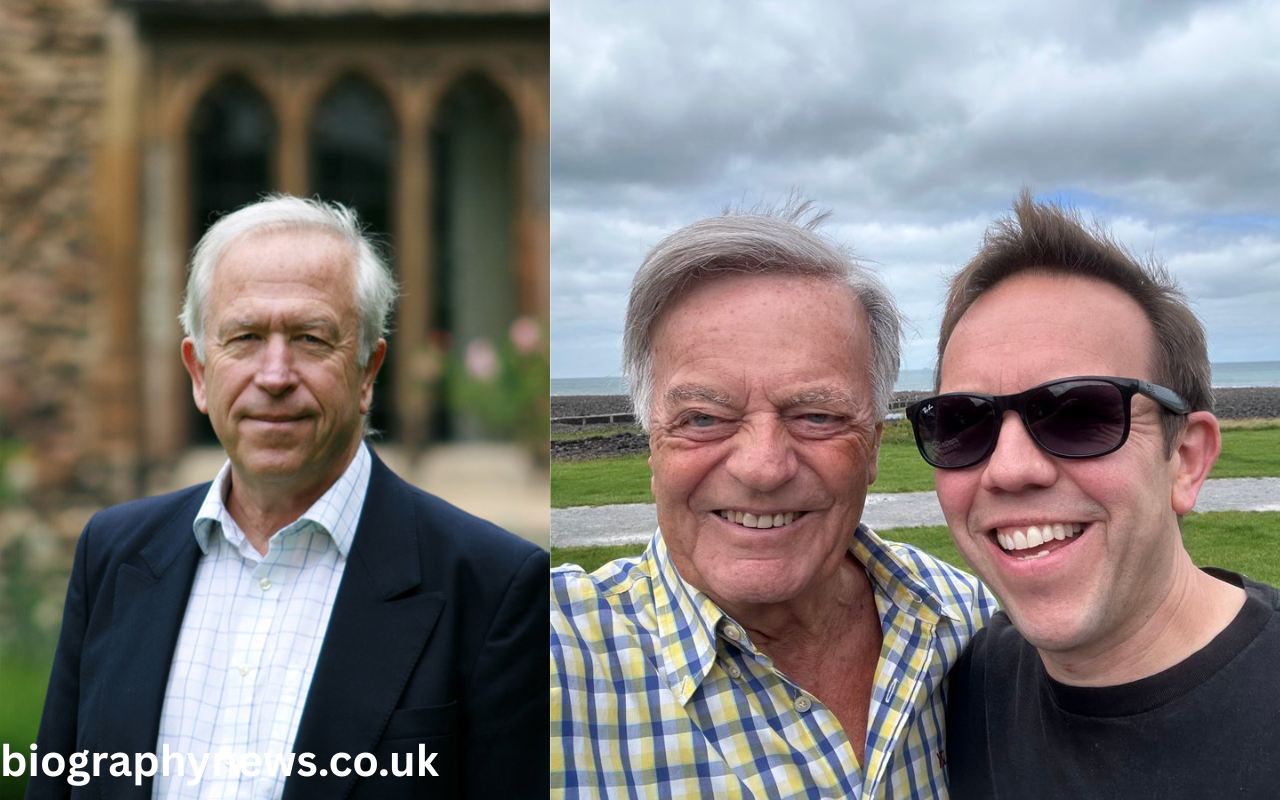
Simon Anthony Blackburn is a highly influential British philosopher recognized for his work in ethics, metaethics, and the philosophy of language. Born in 1944 in England, Blackburn has dedicated his life to exploring how humans understand morality, truth, and the use of language. His work combines rigorous analytic philosophy with accessible explanations, making him a prominent figure for both scholars and the general public.
Over decades of teaching, writing, and public speaking, Blackburn has shaped the field of contemporary philosophy. His approach to ethics, particularly his development of quasi-realism, has redefined how philosophers interpret moral statements and objectivity. Beyond academia, he is known for bringing philosophical concepts into everyday conversation, helping readers and audiences think critically about moral choices and human reasoning.
Blackburn’s influence extends globally. He has held teaching and visiting positions in prestigious universities, including Cambridge, Oxford, and institutions in the United States. His writing, lectures, and public appearances have cemented his reputation as a thinker who bridges technical philosophy and practical reflection.
Early Life and Education: Foundations of a Philosopher
Simon Blackburn was born in Chipping Sodbury, Gloucestershire, in 1944. He grew up in post-war Britain during a time when intellectual pursuits and moral reflection were highly valued in education. Blackburn showed early curiosity about human nature, ethics, and language, traits that would define his later academic path. His schooling at Clifton College fostered both academic rigor and personal discipline, preparing him for university-level study.
He went on to study philosophy at Trinity College, University of Cambridge, where he excelled in moral sciences, a broad program combining ethics, logic, and philosophy of mind. During his undergraduate years, he engaged deeply with the works of Hume, Wittgenstein, and other analytic philosophers, laying the intellectual groundwork for his future contributions. These early encounters with philosophical texts shaped his focus on ethical reasoning and the philosophy of language.
After Cambridge, Blackburn pursued doctoral research at Churchill College, focusing on moral philosophy and analytic thought. By 1969, he had completed his Ph.D., having already developed a reputation as a meticulous and original thinker. These formative years instilled in him a strong sense of clarity, logical precision, and the ability to present complex ideas in a digestible manner—skills that would define both his teaching and writing.
Academic Career: From Cambridge to Global Influence
Simon Blackburn’s professional academic journey began as a Junior Research Fellow at Churchill College, Cambridge. Soon after, he joined Pembroke College, Oxford, where he taught from 1969 to 1990. This period was pivotal, as he refined his philosophical theories and began publishing works that would make lasting contributions to metaethics and the philosophy of language.
In 1990, Blackburn moved to the United States, accepting the Edna J. Koury Distinguished Professorship at the University of North Carolina at Chapel Hill. His years in America expanded his academic network, exposing him to new debates in analytic philosophy and enabling him to engage with international audiences. He also gained experience mentoring students in both research and public philosophy, a role he would continue for decades.
Returning to Cambridge in 2001, Blackburn became the Bertrand Russell Professor of Philosophy and Fellow of Trinity College. He maintained this position until 2011, after which he continued teaching as a Distinguished Research Professor in the U.S. His career reflects a balance of research, teaching, and public engagement, demonstrating how a philosopher can influence both academic circles and broader society.
Quasi-Realism: A Revolutionary Approach to Ethics
One of Blackburn’s most renowned contributions to philosophy is his development of quasi-realism. Quasi-realism addresses the longstanding debate in metaethics over whether moral statements are objectively true or merely expressions of personal attitudes. Unlike moral realism, which asserts that ethical facts exist independently of humans, quasi-realism allows moral discourse to behave as though moral truths exist, while grounding morality in human attitudes and social practices.
Quasi-realism has three key aspects. First, it explains why moral statements can guide action, influence decisions, and support debate. Second, it accounts for moral disagreement without relying on objective moral facts. Third, it enables ethical discourse to maintain logical consistency and authority while remaining compatible with a naturalistic understanding of human behavior. This innovative approach has become a foundational perspective in contemporary ethical theory.
Through quasi-realism, Blackburn successfully bridges the gap between expressivist approaches, which view morality as an expression of emotion, and traditional realism, which posits that moral truths exist independently. His framework provides tools for philosophers and students alike to analyze ethical language critically and meaningfully, influencing how morality is taught and debated around the world.
Philosophy of Language and Truth: Understanding Meaning
Blackburn’s work extends beyond ethics into the philosophy of language, focusing on how meaning, representation, and communication function. In his writings, he emphasizes that language is rooted in social practices, enabling humans to convey intentions, reason about the world, and negotiate moral and factual truths. He explores how linguistic meaning emerges from human interaction rather than being purely abstract or formal.
His books such as Spreading the Word investigate how meaning, assertion, and justification work together in human communication. He highlights the ways people use language to create shared understanding, make claims, and reason collectively. This work is closely connected to his ethical theories, as moral statements are themselves a form of meaningful linguistic communication.
Blackburn has also written extensively on truth, defending a deflationary view. According to this perspective, truth is not a deep metaphysical property but a practical tool that facilitates discourse. His work on truth examines the role of language in describing reality and supporting human understanding, bridging analytic philosophy with everyday reasoning in a practical, accessible way.
Major Works and Publications: Books That Shaped Thought
Simon Blackburn has authored numerous influential books, ranging from highly technical philosophical texts to accessible introductions. His Oxford Dictionary of Philosophy is widely used by students, scholars, and general readers as a comprehensive reference for philosophical terminology and concepts. Its clarity and scope have made it an essential resource across multiple disciplines.
Other major works include Spreading the Word, Essays in Quasi-Realism, and Ruling Passions, which collectively explore meaning, ethics, and practical reasoning. For broader audiences, books like Think and Being Good distill complex philosophical ideas into approachable guides, inviting readers to engage with questions about morality, truth, and human behavior.
Blackburn’s later work, Mirror, Mirror: The Uses and Abuses of Self-Love, examines modern issues of narcissism, self-esteem, and ethical reflection. Across all his publications, he demonstrates the consistent integration of analytic rigor, ethical inquiry, and a commitment to making philosophy accessible and practical for everyday life.
Public Philosophy and Media Engagement
A hallmark of Simon Blackburn’s career is his dedication to public philosophy. He has appeared on radio programs like BBC Radio 4’s The Moral Maze, participated in television interviews, and contributed essays to major publications. His approachable style allows complex ideas about morality, language, and truth to reach audiences outside traditional academic settings.
Blackburn’s media work also illustrates his belief that philosophy is not only a scholarly pursuit but a tool for understanding human behavior and society. By bringing rigorous thought into public discourse, he has encouraged readers and listeners to question assumptions, engage critically with ideas, and apply ethical reasoning to everyday situations.
His commitment to public engagement has been recognized worldwide, and his lectures, interviews, and writings continue to inspire students, philosophers, and curious minds to explore philosophical ideas in meaningful and practical ways.
Read More: Declan Mone: Life, Career, and Professional Journey of the British Finance Expert
Legacy and Enduring Influence
Simon Blackburn’s legacy is multifaceted, encompassing scholarly research, teaching, and public engagement. His development of quasi-realism remains a cornerstone of contemporary ethical theory, influencing both analytic philosophy and practical ethics. Philosophers continue to engage with his ideas on moral objectivity, expressivism, and metaethics as central to debates in the field.
Beyond academia, Blackburn’s clear and engaging writing has shaped how philosophy is taught and understood worldwide. His books continue to reach new generations of students, while his public appearances promote critical thinking, reflection, and ethical awareness in wider society.
Blackburn’s contributions demonstrate how philosophical thought can be rigorous, practical, and accessible simultaneously. By bridging technical debate with public understanding, he has ensured that his work remains relevant, influential, and inspiring for both scholars and the general public alike.