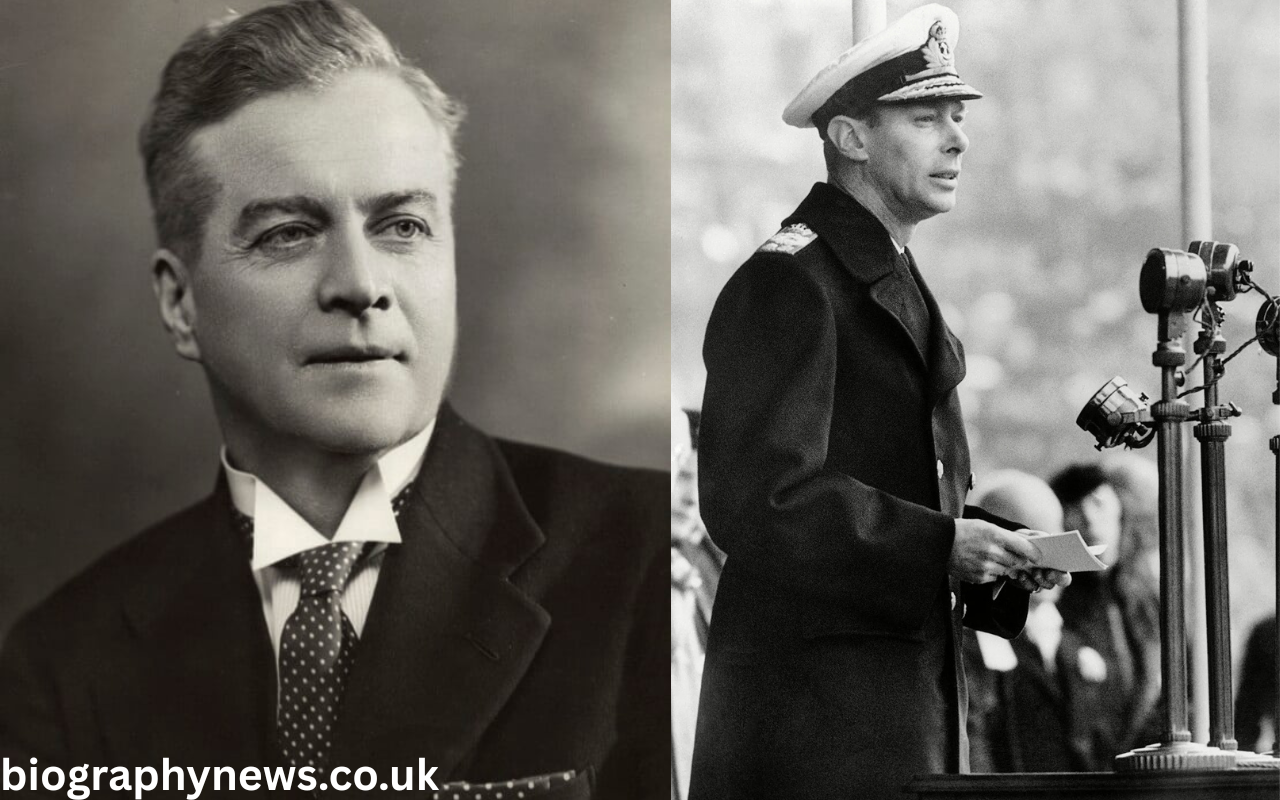
Lionel Logue was born in Adelaide, Australia, in 1880, into a family that valued education and personal achievement. From an early age, he displayed a fascination with voice, language, and communication. While other children played, Logue would practice recitation, listen carefully to how people spoke, and experiment with tone and pitch. These early experiences laid the foundation for what would become a lifelong dedication to helping others find their voice.
During his school years, Logue immersed himself in literature, drama, and public speaking, sharpening both his intellectual and expressive skills. He discovered that clarity of speech was closely tied to confidence, a lesson that would later define his methods as a speech therapist. By learning to observe and analyze the nuances of speech, he developed a curiosity about the physical and psychological aspects of communication.
As a young man, Logue began teaching elocution and voice training. His approach went beyond simply correcting pronunciation. He focused on building confidence and reducing anxiety, understanding that a person’s inner fear could manifest as stammering or hesitation. These principles would guide his work for decades, eventually leading him to work with some of the most prominent figures of his time.
Journey from Australia to London
After gaining experience in Australia, Lionel Logue recognized the need to expand his practice in a city where he could reach a larger and more diverse audience. In the early 1920s, he traveled to London, initially as a visitor but soon decided to establish permanent roots. London’s prestigious medical districts, especially Harley Street, provided the ideal location to attract clients seeking expert guidance in speech and communication.
In London, Logue set up a speech therapy and elocution practice that soon gained a reputation for excellence. Unlike many contemporaries, he combined practical exercises with psychological encouragement, helping clients manage both physical challenges and emotional anxiety associated with speaking. His unconventional yet effective methods quickly distinguished him from other practitioners.
His London practice was a hub for actors, professionals, and public figures who sought more than technical correction. Logue’s approach integrated breathing exercises, posture alignment, and personalized speech drills, all while fostering confidence and composure. By blending physical techniques with mental preparation, he created a holistic approach that would later prove instrumental in transforming the speech of King George VI.
Meeting the Duke of York
Lionel Logue’s most famous collaboration began in 1926 when Prince Albert, Duke of York, sought help for a severe stammer that hampered public speaking and caused significant anxiety. The Duke’s fear of addressing audiences was so acute that it affected his royal duties. Logue’s method was a revelation: rather than forcing rapid correction, he emphasized relaxation, controlled breathing, and gradual confidence building.
Over multiple sessions, Logue helped the Duke understand that his stammer was not a reflection of intelligence or character but a challenge that could be managed with proper techniques. The sessions often involved repetitive vocal exercises, tongue placements, and long, controlled breaths. Logue’s insistence on patience and consistent practice allowed the Duke to approach public speaking with renewed assurance.
The trust between Logue and the Duke grew into a warm, professional friendship. Their partnership demonstrated that effective speech therapy required empathy as much as technique. Logue’s ability to listen, encourage, and gently challenge his client transformed not only the Duke’s voice but also his confidence as a leader facing unprecedented national responsibilities.
Revolutionary Speech Therapy Techniques
Lionel Logue’s approach to speech therapy was innovative for his time. He recognized that stammering often resulted from a combination of physical tension and psychological stress. To address both, Logue developed exercises focused on diaphragmatic breathing, tongue control, and vocal projection, alongside activities that reduced anxiety during speaking engagements.
His methods often included practical exercises, such as sustaining vowel sounds or reciting phrases slowly and deliberately. These exercises were designed to retrain the vocal apparatus while simultaneously giving the speaker a sense of control over their voice. Logue emphasized the importance of daily practice, often encouraging clients to integrate exercises into everyday routines.
What made his techniques revolutionary was their human-centered approach. He treated clients as individuals rather than cases, adjusting exercises to each person’s unique challenges. By combining physical training, emotional support, and humor, he created a method that was effective, accessible, and empowering. These principles continue to influence modern speech therapy and voice coaching.
The King’s Speech and Global Recognition
The story of Lionel Logue’s work with King George VI reached the public consciousness through books and the award-winning film The King’s Speech. The movie highlighted both the technical and emotional aspects of Logue’s work, showing how dedication and innovative methods helped the king overcome his stammer to deliver powerful speeches during a critical period in history.
The film brought international recognition to Logue, shining a light on the importance of speech therapy and the often-overlooked challenges faced by individuals with stammers. By portraying their relationship, the story emphasized empathy, trust, and the transformative power of skilled guidance, inspiring both speech professionals and the general public.
Beyond popular media, the legacy of Logue’s work encouraged greater understanding of communication disorders. It showed that stammering was not a personal failing but a condition that could be managed with proper techniques and consistent support. This recognition has contributed to ongoing research and development in speech therapy worldwide.
Honors and Professional Contributions
Lionel Logue was formally recognized for his exceptional contributions. He was appointed a Member and later a Commander of the Royal Victorian Order for his service to the royal family, reflecting both professional excellence and personal dedication. These honors acknowledged his significant impact on public life and the role he played in ensuring effective communication at the highest levels of leadership.
Logue’s professional influence extended beyond his royal clients. He was a founding member of organizations that formalized speech therapy practices in Britain, advocating for professional standards and training programs. His pioneering work helped establish speech therapy as a recognized and respected field, influencing generations of practitioners.
His dedication to accessible therapy also defined his legacy. He treated clients across different social classes, demonstrating a commitment to helping individuals improve communication regardless of wealth or status. This ethos reinforced the importance of empathy, patience, and personalized care in the therapeutic process.
Personal Life and Character
Lionel Logue was not only a professional visionary but also a devoted family man. He married Myrtle Gruenert and had three children, fostering a home environment that valued education, creativity, and resilience. His eldest son, Valentine, went on to achieve prominence as a neurosurgeon, reflecting the family’s commitment to service and excellence.
Logue’s personal interests complemented his professional life. He enjoyed music, acting, and gardening, often incorporating creative elements into therapy sessions. His humor, warmth, and ability to connect with people on a personal level made him an effective and beloved mentor.
Even during times of crisis, such as World War II, Logue continued to support clients and contribute to the community. His dedication to service, both professionally and personally, reinforced his reputation as a compassionate and visionary figure whose influence extended far beyond speech therapy.
Read More: Nina Myskow: Life, Career, and Lasting Influence on British Media
Enduring Legacy
Lionel Logue’s impact continues to be felt in the fields of speech therapy, communication coaching, and public speaking. His methods demonstrated the importance of addressing both physical mechanics and emotional confidence, laying the groundwork for modern approaches to speech and language challenges.
Through his work with King George VI, Logue showed that determination, patience, and personalized guidance could overcome even deeply ingrained speech difficulties. His story remains a powerful reminder that effective communication is both a skill and an art, shaped by technique, empathy, and persistence.
Today, Logue’s legacy inspires professionals and individuals alike to embrace the power of voice. His life demonstrates that communication is not merely about words but about confidence, self-expression, and connection — lessons that remain as relevant now as they were in his lifetime.