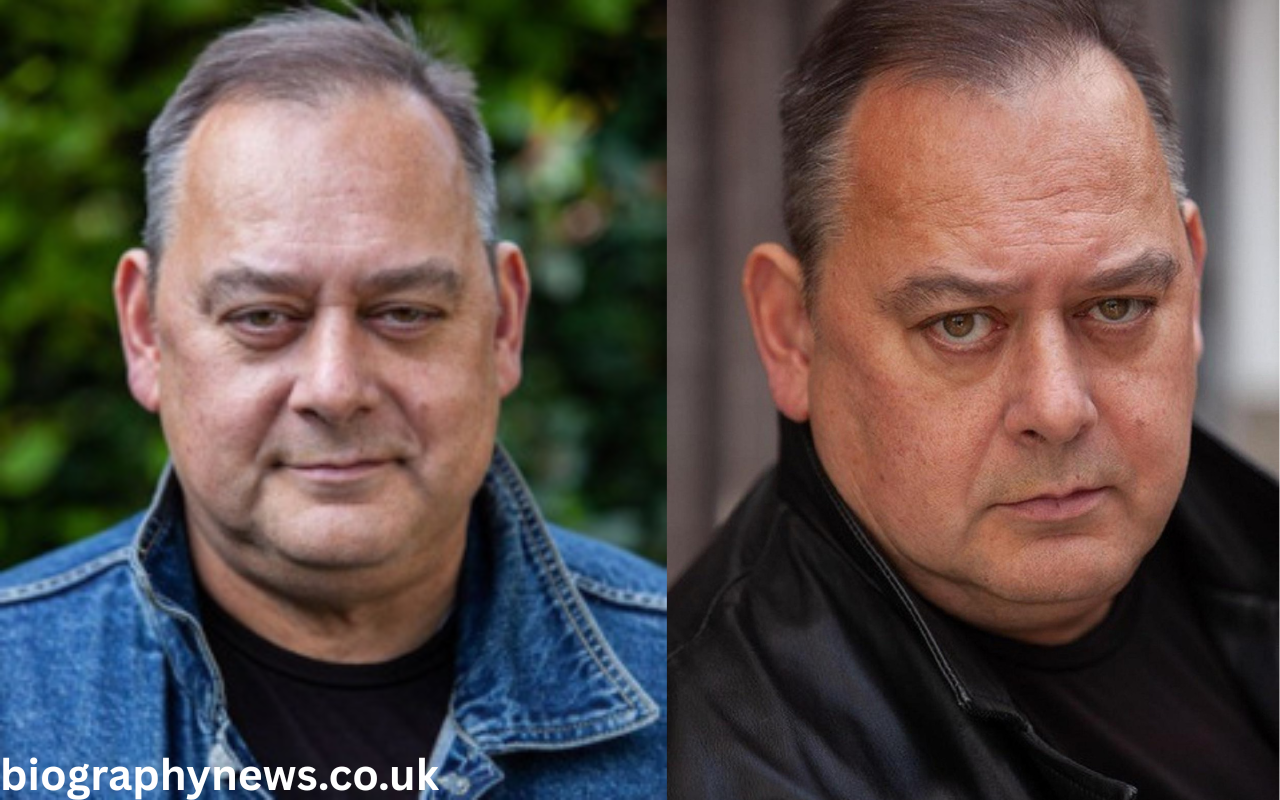
Nigel Pivaro is a name that carries weight in British television, theatre, and journalism. Best known for his unforgettable role as Terry Duckworth in Coronation Street, he built early fame as a talented actor before taking an unexpected and inspiring turn into investigative journalism and documentary filmmaking. His story is not just about celebrity or television success; it is about reinvention, intellectual curiosity, and a lifelong commitment to storytelling in different forms.
Born and raised in Manchester, Pivaro’s career reflects the grit and determination often associated with the North of England. He has moved confidently between the worlds of drama and hard-hitting journalism, proving that creative expression can take many shapes. Whether on stage, on screen, or in print, Nigel Pivaro has consistently demonstrated depth, authenticity, and a willingness to challenge himself.
Early Life and Manchester Roots
Nigel Pivaro was born on December 11, 1959, in Manchester, England. Growing up in a working-class environment, he experienced firsthand the realities of northern urban life, something that later informed both his acting and journalism. Manchester in the 1960s and 1970s was a city full of cultural energy but also economic challenges, and this duality shaped his understanding of society from an early age.
His family background includes Italian heritage, adding another layer to his identity. This blend of cultures contributed to his grounded yet expressive personality. The sense of community in Manchester, along with the city’s strong storytelling traditions, played a significant role in developing his interest in performance and social issues.
Education became an important stepping stone in his life. He eventually trained at the Royal Academy of Dramatic Art, widely regarded as one of the most prestigious drama schools in the United Kingdom. His time there sharpened his technical skills and introduced him to classical acting methods, preparing him for the television breakthrough that would soon define the first chapter of his career.
Breakthrough as Terry Duckworth in Coronation Street
Nigel Pivaro’s big break came in 1983 when he was cast as Terry Duckworth in Coronation Street. The character was the rebellious and often troublesome son of Jack and Vera Duckworth, two beloved figures in the long-running soap opera. Terry quickly became one of the show’s most talked-about characters, known for his selfish decisions, emotional manipulation, and complicated relationships.
Pivaro brought a layered performance to the role. Rather than playing Terry as a simple villain, he added vulnerability and emotional depth. Viewers saw a character who was flawed, sometimes cruel, but undeniably human. This complexity helped cement Terry Duckworth as one of Coronation Street’s most memorable figures during the 1980s and 1990s.
Although he left the show as a regular cast member in 1987, Pivaro returned several times over the years for dramatic storylines. His final appearance in 2012 marked the end of an era for many long-time viewers. Even decades after his first episode, his portrayal of Terry remains a defining moment in British soap opera history.
Life Beyond the Soap Opera Spotlight
While Coronation Street made him famous, Nigel Pivaro was determined not to be defined solely by one character. Like many actors associated with long-running television shows, he faced the challenge of avoiding typecasting. Instead of remaining confined to soap roles, he actively sought diverse opportunities in theatre, television dramas, and film.
He appeared in various stage productions, showcasing his versatility as a performer. Theatre allowed him to explore classical texts and contemporary works, often demanding a different intensity and discipline than television. His performances in serious dramatic roles demonstrated that he possessed far more range than his soap persona suggested.
Film and television guest roles also broadened his experience. By stepping away from the comfort of an established character, he proved that he was not just Terry Duckworth but a trained actor capable of handling complex scripts and demanding roles. This willingness to push beyond comfort zones would later define his career shift into journalism.
Academic Reinvention and a Turn Toward Journalism
One of the most remarkable chapters in Nigel Pivaro’s life began when he decided to return to education. At a stage when many actors might rely on established fame, he chose to pursue academic study in contemporary military and international history. This decision signaled a deep intellectual curiosity and a desire to understand global issues more thoroughly.
He later completed postgraduate studies in social science and economics, further strengthening his analytical skills. Rather than treating education as a side project, he committed fully to academic development. This period of study laid the foundation for a completely new professional identity.
After gaining formal journalistic qualifications, Pivaro began writing for regional and national newspapers. His work focused on serious topics such as urban regeneration, economic inequality, foreign affairs, and social justice. The move from television celebrity to investigative journalist surprised many, but it demonstrated his determination to engage with real-world issues in a meaningful way.
Investigative Reporting and Social Commentary
As a journalist, Nigel Pivaro built credibility through detailed reporting and thoughtful analysis. He contributed to respected publications and became known for tackling complex subjects rather than celebrity gossip. His articles often examined the social consequences of political decisions, particularly in northern England.
Urban regeneration became one of his recurring themes. He investigated how redevelopment projects affected local communities, highlighting both progress and displacement. His Manchester background gave him personal insight into the impact of economic change, and he approached such topics with empathy and balance.
He also wrote about international conflicts and geopolitical developments, drawing on his academic background. His transition from actor to journalist was not superficial; it reflected genuine intellectual engagement. Over time, he earned recognition not as a former soap star writing opinion pieces, but as a serious journalist with informed perspectives.
Documentary Filmmaking and Broadcast Work
Nigel Pivaro’s storytelling extended beyond print journalism into documentary filmmaking. He worked on investigative television programs that explored housing policy, regeneration disputes, and social inequality. These documentaries combined his performance skills with journalistic research, creating compelling and accessible narratives.
His on-screen presence, refined through years of acting, gave him confidence in front of the camera. Unlike many journalists who work primarily behind the scenes, he was comfortable presenting complex issues directly to viewers. This blend of credibility and communication skills made his documentaries engaging and impactful.
Broadcast appearances on current affairs programs further strengthened his reputation. He contributed to discussions on politics and social change, often drawing from both academic knowledge and field reporting. This stage of his career illustrated how his earlier training in drama continued to serve him in unexpected ways.
Return to Theatre and The Commitments
Despite building a respected journalism career, Nigel Pivaro never abandoned acting completely. He eventually returned to the stage, taking on roles in touring productions. One of the most notable was his performance in The Commitments, a stage adaptation of the popular novel about a working-class Dublin soul band.
His return to theatre was warmly received. Audiences appreciated seeing a familiar television face embracing live performance once again. Theatre demands immediacy and connection, and Pivaro demonstrated that his skills had not faded during his years in journalism.
Balancing journalism and acting is no simple task, yet he managed to move between the two disciplines. This dual identity reflects a broader theme in his life: reinvention without rejection of the past. Rather than abandoning one career for another, he allowed both to coexist and inform each other.
Personal Life and Intellectual Interests
Nigel Pivaro has kept much of his personal life private, preferring to let his professional work speak for itself. He is a father and maintains strong ties to Manchester, the city that shaped his identity. His northern roots remain central to his worldview and often influence his writing.
Beyond acting and journalism, he has a strong interest in history, geopolitics, and cartography. His fascination with maps is well known among those familiar with his interviews. This interest reflects a broader curiosity about borders, nations, and global relationships.
He also values education and lifelong learning. His decision to pursue higher education after achieving fame sends a powerful message about growth and intellectual development. It underscores the idea that reinvention is possible at any stage of life.
Read More: Gerald Kyd: A Powerful Journey Through Theatre, Television, and Film
Legacy and Cultural Impact
Nigel Pivaro’s legacy is multifaceted. For many, he will always be remembered as Terry Duckworth, one of the most controversial and compelling characters in Coronation Street history. That role alone secured his place in British television culture.
Yet his impact extends far beyond soap opera fame. His transition into investigative journalism and documentary filmmaking demonstrates that public figures can redefine themselves in meaningful ways. He challenged expectations and refused to be limited by early success.
Today, Nigel Pivaro stands as an example of resilience, adaptability, and intellectual curiosity. His journey from Manchester actor to respected journalist highlights the power of reinvention. In a media landscape often focused on fleeting fame, his career offers a deeper narrative about growth, purpose, and the enduring art of storytelling.