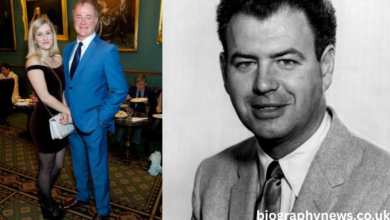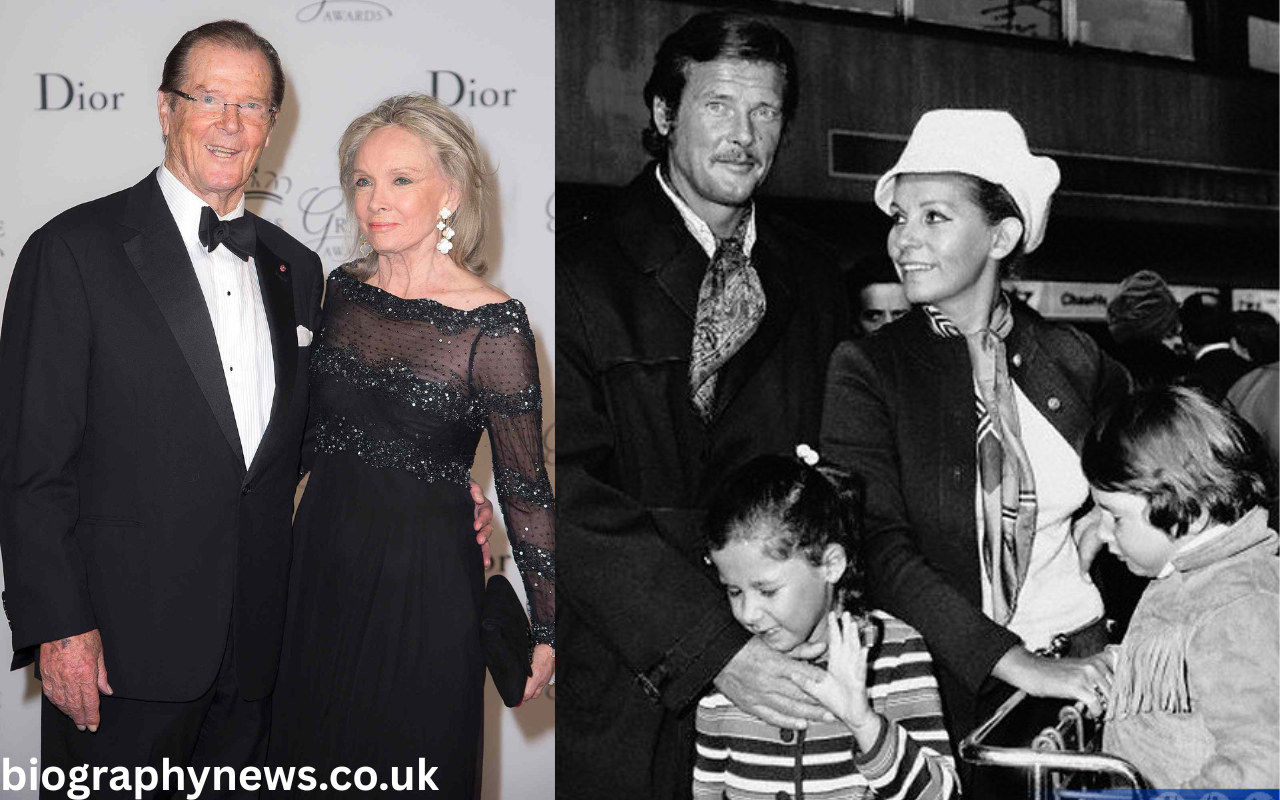
Roger Moore was born in 1927 in London, England, into a modest family. His early life was marked by a mix of artistic curiosity and a desire for adventure. As a young man, Moore pursued acting with enthusiasm, enrolling at the Royal Academy of Dramatic Art. It was during these formative years that he met his first wife, Doorn van Steyn, a fellow student and a budding performer. Their shared interest in performance and entertainment created an initial bond that led to their early marriage.
At just 18 years old, Moore married Doorn van Steyn, embracing youthful optimism and ambition. The couple faced the challenges of building a life together while pursuing careers in the highly competitive world of acting. Their early days involved living in modest conditions, often struggling financially, yet these experiences shaped Moore’s resilience and determination. The young actor had to balance personal commitments with the demands of a career he hoped would flourish on stage and screen.
Despite the shared dreams, Moore’s first marriage faced serious strains. Differences in personal goals, combined with financial pressures, caused tension between the two. After several years, the challenges became insurmountable, leading to their eventual divorce in 1953. This early chapter of Moore’s personal life provided lessons on love, patience, and the importance of compatibility, which influenced his approach to relationships in later years.
Dorothy Squires: A Stormy Relationship in the Spotlight
After his first marriage ended, Roger Moore entered into a high-profile relationship with Welsh singer Dorothy Squires. Dorothy was an established performer with a commanding stage presence, and her glamour captured Moore’s attention. They married in 1953, the same year his first marriage was officially dissolved. The union seemed promising, combining Moore’s rising acting career with Squires’ fame in the music world, creating a powerful celebrity couple of the era.
However, the marriage soon revealed deep incompatibilities. Moore’s growing ambitions in film often clashed with Squires’ personality and lifestyle. The pressures of public attention intensified private conflicts, and the differences in age and temperament led to a turbulent relationship. Rumors and personal struggles surrounded the couple, reflecting the stress that fame can impose on a marriage.
Ultimately, Moore and Squires could not maintain harmony. By the mid-1960s, their relationship had deteriorated significantly. The strain of career demands, personal disagreements, and outside distractions resulted in a divorce in 1968. This chapter of Moore’s life was marked by lessons in endurance, compromise, and the importance of finding a partner aligned with both personal and professional aspirations.
Meeting Luisa Mattioli: A Life-Changing Encounter
Roger Moore’s next significant relationship was with Italian actress Luisa Mattioli. They met on the set of Romulus and the Sabines in 1961, and a strong connection quickly developed. Mattioli was elegant, talented, and ambitious in her own right, creating a relationship built on mutual respect and shared artistic interests. The attraction between them was undeniable, and they soon began a romantic partnership that would last decades.
Moore’s relationship with Mattioli flourished even while he was still finalizing his divorce from Dorothy Squires. Their bond was nurtured by shared travels and professional collaborations, with Mattioli providing both companionship and grounding influence. Over time, their commitment to each other deepened, and they decided to marry once Moore’s previous divorce was fully resolved.
In 1969, Roger Moore and Luisa Mattioli married, marking the start of his longest marital chapter. Their marriage was characterized by love, loyalty, and shared experiences, from raising a family to traveling the globe. This union not only offered Moore stability but also enriched his life with the joys and challenges of domestic partnership, a contrast to his earlier tumultuous relationships.
Family Life with Luisa Mattioli
Roger Moore and Luisa Mattioli welcomed three children into their family: Deborah, Geoffrey, and Christian. The children grew up in a household that balanced Moore’s demanding acting career with the normal routines of family life. Moore and Mattioli were committed to providing a nurturing environment, ensuring their children experienced both the excitement of fame and the stability of a loving home.
Living internationally, Moore’s family experienced a unique blend of cultures and lifestyles. From London to Italy, the children were exposed to different languages, traditions, and social environments. Moore made every effort to maintain close ties with his children, prioritizing family vacations, celebrations, and personal involvement in their growth.
Despite these positive aspects, the marriage eventually faced strains. Career demands, evolving personal priorities, and natural differences led to a gradual separation in the early 1990s. The divorce was finalized in 2000, ending a long chapter but leaving a lasting legacy of love, family values, and memorable shared experiences.
Meeting Kristina Tholstrup: A New Beginning
After separating from Luisa Mattioli, Roger Moore developed a close relationship with Kristina “Kiki” Tholstrup, a Danish socialite. Tholstrup was well-known in European social circles, and her intelligence, charm, and warmth attracted Moore. Their initial interactions were friendly, rooted in mutual respect and shared social interests, which gradually evolved into a romantic connection.
Their relationship grew steadily in private, away from the intense scrutiny that had characterized Moore’s previous marriages. The two shared a vision of companionship based on trust, support, and common values, including a commitment to philanthropy and cultural engagement. Moore found a sense of calm and stability with Tholstrup, contrasting with the turbulence of his earlier marriages.
In 2002, Roger Moore and Kristina Tholstrup married in a private ceremony. The choice for privacy reflected both Moore’s desire to shield the event from media intrusion and the couple’s preference for simplicity and intimacy. The marriage marked a period of serenity in Moore’s life, emphasizing emotional connection over public spectacle.
Life and Partnership with Kristina Tholstrup
Roger Moore’s marriage to Kristina Tholstrup was defined by mutual respect and shared priorities. Beyond romantic affection, the couple focused on philanthropy, cultural events, and traveling together. Tholstrup’s organized and supportive nature allowed Moore to balance his public responsibilities with personal contentment, fostering a partnership that thrived on collaboration rather than conflict.
Tholstrup became an integral part of Moore’s later life, attending public events and supporting his humanitarian commitments. The couple’s shared interests in charities and global causes strengthened their bond and highlighted their alignment of values. Moore often described Tholstrup as a calming and grounding influence, providing a steady presence in his final years.
Their partnership exemplified mature love, combining companionship, loyalty, and shared purpose. It was a relationship that focused on enjoying life’s later stages together while maintaining strong connections with family, blending affection and mutual respect into a lasting union.
Blending Families and Enduring Legacy
Kristina Tholstrup’s daughter, Christina Knudsen, became part of Moore’s extended family, creating a blended household of children and stepchildren. Moore embraced his role as a stepfather, building positive relationships and fostering emotional bonds with the younger generation. The blending of families brought new joys and occasional challenges, requiring patience, understanding, and active engagement.
Tragedy touched the family when Christina Knudsen passed away in 2016 due to illness. Moore and Tholstrup’s response demonstrated their dedication to family, offering love, support, and care during this difficult time. This period highlighted the importance of family resilience and the deep emotional connections Moore maintained beyond his celebrity persona.
Roger Moore’s legacy extends beyond his screen career. His marriages, children, and blended family reflect a life rich with human experiences, lessons in love, and commitment. From youthful romance to mature companionship, his journey offers a compelling narrative of personal growth, family devotion, and enduring affection.
Read More: Marco Silva and the Role of Fulham Manager: Leadership, Tactics, and Club Vision
Reflections on Roger Moore’s Life and Relationships
Roger Moore’s life was defined not only by his iconic acting career but also by the depth of his personal relationships. His marriages, ranging from youthful passion to mature love, reveal the complexities of balancing fame, family, and personal growth. Each chapter offered lessons, whether in resilience, compromise, or emotional intelligence.
Moore’s relationship with Luisa Mattioli produced a legacy of children and shared experiences, while his marriage to Kristina Tholstrup exemplified stability, companionship, and shared purpose. His personal choices and enduring bonds reflected a man committed to both family and the wider world, balancing private joys with public obligations.
Ultimately, Moore’s story demonstrates that even lives in the public eye can have profound private depth. His marriages, children, and blended family contributed to a full, meaningful life, offering insights into love, loyalty, and the enduring human need for connection and companionship.