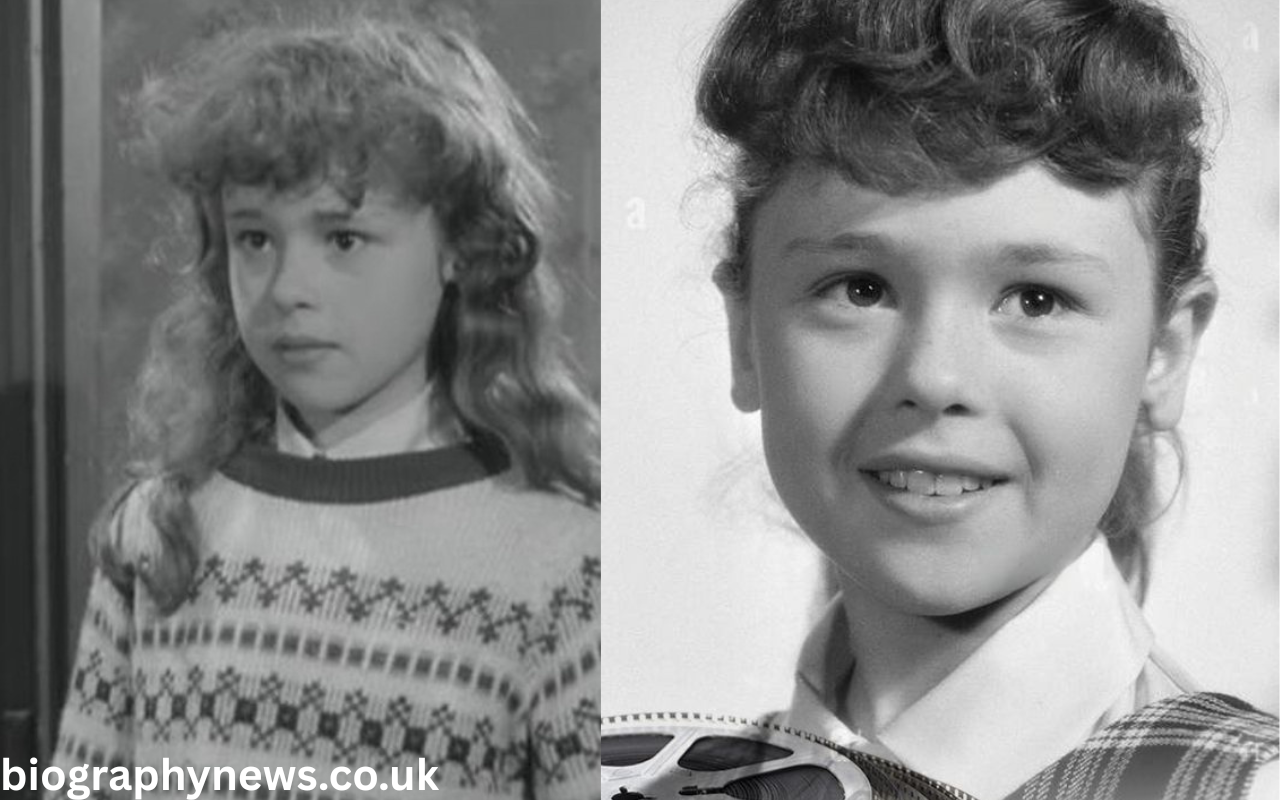
Roberta Tovey was born on August 9, 1953, in Shepherd’s Bush, London, a vibrant area known for its thriving arts and entertainment scene. From an early age, she showed a remarkable affinity for performing, often participating in school plays and local theater productions. Her exposure to the creative world was amplified by her family background, particularly her father, George Tovey, who was also an actor and understood the nuances of show business.
By the time Roberta was five, she had already begun to attract attention for her natural on-screen presence. Family friends and local directors recognized her talent, which eventually led to her first small roles in British cinema. Her early experiences provided a solid foundation, giving her confidence in front of the camera and preparing her for larger roles.
Growing up in post-war London, Roberta was immersed in a society rebuilding itself through culture and media. The booming film industry in the 1960s offered opportunities for young actors, and Roberta seized them with determination. This early start in acting became a pivotal point in shaping her career, setting her apart from many of her peers.
Breakthrough Role in Dr. Who and the Daleks
Roberta Tovey’s career-defining moment came with the 1965 film Dr. Who and the Daleks, where she played Susan, the Doctor’s granddaughter. This role introduced her to audiences across Britain and internationally, marking her as one of the memorable child stars of her generation. Her portrayal balanced charm, intelligence, and curiosity, capturing the essence of a character that appealed to both children and adults.
The film was a major success, thanks in part to its connection with the beloved Doctor Who television series and the popularity of the Daleks. Roberta’s performance brought warmth and humor to the sci-fi narrative, earning her recognition from critics and fans alike. She reprised her role in the sequel, Daleks’ Invasion Earth 2150 A.D. (1966), which further cemented her status in British cinema.
These films became cultural touchstones, and Roberta’s involvement ensured she would remain a familiar face in sci-fi fandom. Even decades later, the Dalek movies are celebrated for their imaginative storytelling and Roberta’s memorable performances. The role also created lifelong connections with co-stars and fans, highlighting the impact of her early work in shaping her career.
Expanding Film Career Beyond Sci-Fi
While Roberta is best known for her Dalek films, she demonstrated versatility by taking on roles in other genres. In A High Wind in Jamaica (1965), she appeared in a dramatic adventure story, showcasing her ability to handle more serious and nuanced performances. This move highlighted her adaptability as an actress, proving she could thrive outside the sci-fi world.
Roberta also participated in films like The Beast in the Cellar (1970), a psychological horror, where her performance demonstrated maturity and depth. These roles allowed her to break away from the child-star image, giving her opportunities to explore complex characters and diverse narratives. Each film added layers to her skill set and expanded her visibility in British cinema.
Her work across multiple genres reflected a conscious effort to avoid typecasting. Roberta’s early career is a testament to her willingness to take risks and explore different facets of storytelling, whether in family-oriented films, adventures, or suspenseful dramas. This versatility became a hallmark of her career and contributed to her enduring presence in the industry.
Television Work and Transition to Adult Roles
As Roberta matured, she successfully transitioned into television, adapting to new roles and formats. In the late 1960s and 1970s, she appeared in popular British sitcoms such as Not in Front of the Children, where her comedic timing and charm made her a memorable presence. Television offered her consistent work and exposure to a broader audience.
She also took on guest roles in series like Going Straight (1978) and My Husband and I (1987), showcasing her ability to handle both comedic and dramatic material. These appearances helped her maintain relevance in an evolving entertainment industry, demonstrating that she could successfully move from child star to adult actress.
Television became an important platform for Roberta, allowing her to experiment with character types and narrative styles. Her roles, though sometimes brief, often left lasting impressions due to her expressive performances and professional demeanor. The medium helped her sustain a career beyond cinema and remain connected with audiences of all ages.
Roberta Tovey and the Doctor Who Fandom
Roberta’s role in the Dalek films forged a lifelong connection with the Doctor Who fandom. Fans of the series regard her portrayal of Susan as iconic, celebrating the innocence and courage she brought to the character. Conventions, interviews, and fan events often feature Roberta reflecting on her experiences, highlighting her enduring influence on the franchise.
Her father, George Tovey, also had connections to Doctor Who, creating a unique family legacy within the universe. This dual association has fascinated fans and historians alike, emphasizing Roberta’s place in the cultural fabric of British science fiction. The nostalgia surrounding the Dalek films continues to fuel interest in her work decades after their release.
Even with modern adaptations of Doctor Who, Roberta’s performances remain a reference point for the charm and creativity of the early cinematic interpretations. Her contribution to the franchise represents not just a role, but an enduring presence in the history of British sci-fi media, celebrated by generations of fans.
Personal Life and Behind-the-Scenes Insights
Outside of acting, Roberta Tovey led a life closely tied to the arts, influenced heavily by her family’s creative background. Her father’s guidance provided insight into the demands of the entertainment world, helping her navigate the pressures of early fame. Though she stepped back from mainstream acting later in life, her experiences shaped her personal development and understanding of the industry.
Roberta has shared stories of her early days on set, revealing both the excitement and challenges of child stardom. She often reflected on the intense schedules and responsibilities that came with being a young actor, emphasizing the importance of support from family and mentors in sustaining a healthy career.
Her personal journey underscores a balance between professional achievement and life beyond the screen. Roberta’s choices, from selective roles to private endeavors, highlight a deliberate approach to career longevity while maintaining personal fulfillment.
Legacy in British Film and Television
Roberta Tovey’s impact on British entertainment extends far beyond her early films. Her work in the Dalek movies, along with a diverse portfolio of film and television roles, demonstrates a career marked by versatility and dedication. Fans, critics, and historians often cite her performances as examples of talent combined with charm and professionalism.
Her presence in both mainstream and cult cinema ensures that her contributions are recognized across generations. Whether in adventure films, family dramas, or iconic sci-fi, Roberta consistently delivered performances that resonated with audiences. Her career serves as a model for young actors navigating the transition from child to adult roles.
Even today, retrospectives and fan screenings celebrate her work, reflecting her lasting influence on British film culture. Roberta Tovey’s career exemplifies how talent, adaptability, and dedication can leave a meaningful legacy in entertainment.
Continuing Influence and Modern Appreciation
Though Roberta has largely stepped away from the spotlight, her work continues to be appreciated by contemporary audiences. The resurgence of interest in classic British cinema, including the Dalek films, has introduced her performances to new generations of fans. Discussions online, film blogs, and social media platforms frequently highlight her contributions to early sci-fi and family films.
Her appearances at fan conventions have allowed her to reconnect with admirers and share her experiences, providing context for the historical and cultural significance of her roles. These engagements have reinforced her status as a respected figure within both film history and the Doctor Who community.
Roberta’s enduring presence in the cultural memory of British entertainment illustrates how early performances can have long-term resonance. Her influence is a reminder of the power of film and television to create timeless connections with audiences across decades.