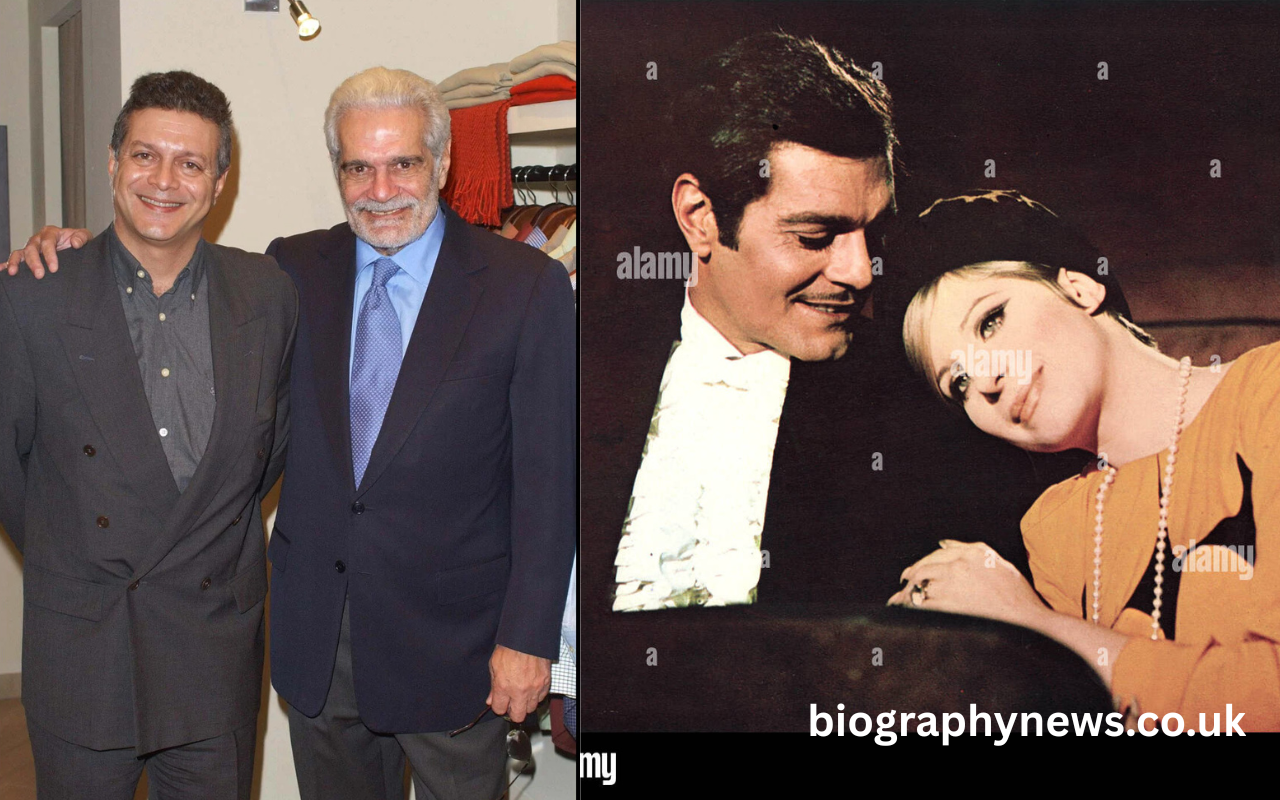
Tarek Sharif is a name that resonates within the cinematic world primarily because of his connection to Omar Sharif, one of the most iconic actors of the 20th century. Born into a family of film legends, Tarek Sharif’s life has been surrounded by the glitz, creativity, and challenges of the cinematic world. Though not as publicly active as his parents in the film industry, Tarek’s contributions and early experiences reflect a unique intersection of culture, family legacy, and cinema history.
The story of Tarek Sharif is intertwined with the golden age of Egyptian cinema and international film history. From a very young age, he was exposed to global cinema trends, witnessing firsthand how films could influence societies and cultures. His upbringing provided him with rare insights into storytelling, performance, and the impact of cinema beyond entertainment.
Growing up as the child of Omar Sharif and Faten Hamama meant that Tarek Sharif lived in an environment where creativity, discipline, and global recognition were part of everyday life. This upbringing shaped his worldview and allowed him to appreciate both the opportunities and pressures that come with belonging to a legendary cinematic family.
Early Life and Family Heritage
Tarek Sharif was born in 1957 in Egypt, at a time when Egyptian cinema was at its peak. His father, Omar Sharif, was already gaining recognition not just in Egypt but internationally, having starred in films that would become timeless classics. Omar Sharif’s fame brought global attention to his family, and Tarek’s early years were inevitably shaped by this extraordinary environment.
Tarek’s mother, Faten Hamama, was one of the most celebrated actresses in Arab cinema. Her talent, professionalism, and contribution to the film industry helped define a generation of Egyptian filmmakers and actors. Being raised by parents who were deeply immersed in the arts meant that Tarek had a front-row seat to some of the most significant cultural shifts in cinema during the 20th century.
Despite the spotlight on his family, Tarek’s childhood was a blend of ordinary and extraordinary experiences. On one hand, he enjoyed the warmth and guidance of a close-knit family; on the other, he was often surrounded by the pressures and expectations that come with being part of a legendary cinematic lineage. This duality would later influence his perspectives on career, identity, and public life.
Tarek Sharif in Cinema: Early Roles
Tarek Sharif is best known for his role as the young Yuri Zhivago in the iconic film Doctor Zhivago, which was released in 1965. Directed by David Lean, this epic story brought Tarek into the global spotlight at an early age, even if briefly. His portrayal, though limited in screen time, provided the emotional foundation for one of cinema’s most beloved characters.
Participating in such a globally acclaimed production was more than just an acting opportunity—it was a formative experience. Tarek learned about the complexities of filmmaking, the discipline required on international sets, and the nuances of performing in emotionally charged scenes. These experiences helped him understand the art of storytelling in a practical, immersive way.
The significance of this role also lies in its historical context. Doctor Zhivago was a major production that combined talent, location shoots, and intricate storytelling. Tarek’s involvement highlights how even brief contributions can leave a lasting impact on cinematic legacy, connecting a young actor to a monumental piece of film history.
The Influence of Omar Sharif on Tarek
Omar Sharif’s impact on Tarek Sharif’s life extends far beyond shared appearances on screen. Omar’s global recognition introduced Tarek to different cultures, languages, and artistic styles from an early age. Watching his father navigate the film industry offered lessons not only in acting but also in resilience, diplomacy, and professionalism.
Tarek observed the discipline required to maintain a successful career across continents. Omar Sharif’s ability to balance work in Hollywood with projects in Egypt gave Tarek a model for combining ambition with cultural identity. This duality became an underlying theme in Tarek’s understanding of life and personal growth.
Additionally, Omar Sharif’s interactions with other legendary actors and filmmakers created an environment where Tarek was exposed to storytelling on multiple levels. From reading scripts to attending film events, Tarek’s formative years were steeped in cinematic knowledge, shaping his appreciation for the art form in ways that few children experience.
Faten Hamama’s Role in Tarek’s Life
Faten Hamama’s influence on Tarek was equally profound. Known as the “Lady of the Arabic Screen,” Faten Hamama was a pioneer in Egyptian cinema and a figure of immense cultural significance. Her professionalism, work ethic, and dedication to her craft provided Tarek with lessons on discipline and artistry from an early age.
Through her, Tarek learned the importance of storytelling that resonates with society. Faten Hamama often chose roles that highlighted social issues and human experiences, teaching Tarek that cinema could be both entertaining and meaningful. This perspective helped shape his understanding of films as more than just performances—they are instruments of cultural communication.
Her support extended beyond professional advice. Faten Hamama nurtured Tarek emotionally, emphasizing values like empathy, patience, and creativity. These lessons remained with him, reinforcing the idea that his family’s legacy was not merely about fame but about integrity, contribution, and cultural impact.
Cultural and Historical Significance
Tarek Sharif’s life is closely tied to a transformative era in cinema. The 1950s and 1960s were periods of experimentation, cross-cultural collaboration, and expansion of film as a global medium. Being part of this environment, even indirectly, positioned Tarek at the heart of a historical and cultural movement.
His brief acting career offers insight into how global cinema allowed Arab actors and families to participate in international storytelling. Tarek’s presence in Doctor Zhivago symbolizes how young actors could become bridges between cultures, connecting audiences to both personal and historical narratives.
Furthermore, Tarek’s story is important for contemporary film scholars and enthusiasts because it highlights the ways in which family legacy intersects with global art. The lessons from his upbringing and early experiences provide a nuanced understanding of cinematic history beyond what is visible on screen.
Tarek Sharif’s Private Life
Unlike his famous parents, Tarek Sharif has maintained a relatively private life. He chose not to pursue the same level of public attention or sustained acting career as Omar Sharif or Faten Hamama. Instead, he appears to have valued personal privacy and a quieter life away from constant media scrutiny.
This decision is significant because it shows that being born into fame does not necessarily determine one’s path. Tarek’s choices reflect an awareness of personal priorities, emphasizing family, personal growth, and cultural understanding over public recognition.
His private life also provides insight into the challenges faced by children of celebrities. Balancing expectations, public curiosity, and personal desires requires maturity and perspective, and Tarek Sharif’s approach demonstrates a thoughtful navigation of these complexities.
Legacy and Influence in Cinema History
Even with limited screen appearances, Tarek Sharif’s legacy is tied to the broader impact of his family on cinema. Omar Sharif and Faten Hamama influenced generations of actors and filmmakers, and Tarek’s connection to them offers a tangible link to this cultural heritage.
His role in Doctor Zhivago preserves a part of cinematic history, highlighting the importance of family participation in shaping stories that transcend borders. Tarek’s involvement underscores how contributions—no matter how brief—can have lasting significance in the collective memory of film audiences.
Moreover, Tarek’s life serves as a case study in the influence of cultural and familial context on personal development. He exemplifies how legacy, upbringing, and early experiences in artistic environments shape perspectives and values, both within and outside the entertainment industry.
Conclusion: Tarek Sharif’s Unique Position
Tarek Sharif occupies a unique position in film history. As the son of two cinematic legends, his early life and brief acting role offer a rare glimpse into the intersection of family, culture, and global storytelling. While he may not have pursued a full-time acting career, his experiences continue to resonate with those studying cinema and cultural legacy.
His life reminds us that the impact of individuals in cinema is not always measured by the number of films they appear in, but also by the stories they connect with, the histories they witness, and the values they inherit. Tarek Sharif’s journey demonstrates the lasting influence of family, culture, and history in shaping one’s understanding of the world.
Ultimately, Tarek Sharif stands as a bridge between eras, a symbol of cinematic legacy, and a figure whose life, though private, offers rich lessons about creativity, heritage, and the enduring power of storytelling.
Read More: Tyson Fury Net Worth: Unveiling the Gypsy King Financial Empire