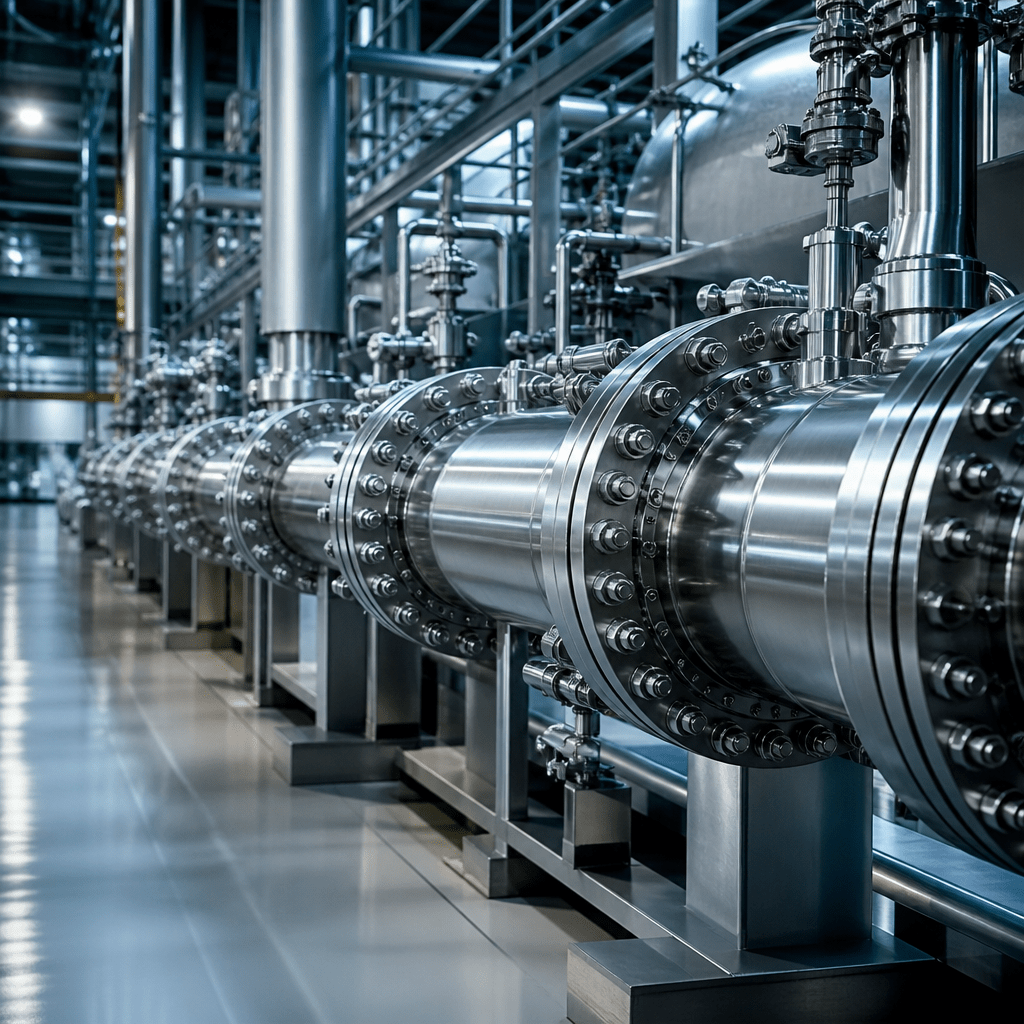
In the evolving landscape of industrial chemistry and bioprocessing, the choice of reactor technology can define the efficiency, scalability, and safety of an entire production operation. Among the most impactful innovations in this space is the widespread adoption of continuous flow reactor systems — particularly tubular designs — that have reshaped how engineers approach complex chemical transformations. From pharmaceutical synthesis to petrochemical refining, these systems offer a compelling alternative to traditional batch processing, delivering tighter control, improved yields, and reduced operational risk.
Understanding the Core Principles of Tubular Reactor Design
A tubular reactor, at its most fundamental level, is a vessel through which reactants flow continuously while undergoing chemical transformation along the length of the tube. Unlike batch reactors, where all reagents are combined in a single vessel and processed over a defined time period, tubular systems maintain a steady-state flow that enables precise control over residence time, temperature gradients, and reaction kinetics. This plug-flow behavior — where fluid moves through the reactor in an orderly, piston-like manner — minimizes back-mixing and allows engineers to design reactions with exceptional predictability.
The geometry of the reactor plays a critical role in its performance. Longer tubes with smaller diameters tend to enhance heat and mass transfer, making them ideal for highly exothermic or endothermic reactions that require rapid thermal management. The surface-area-to-volume ratio in tubular designs is significantly higher than in stirred tank reactors, which translates directly into superior temperature control and reduced risk of runaway reactions — a critical safety advantage in high-stakes industrial environments.
Continuous Processing vs. Batch: Why Industry Is Making the Shift
The pharmaceutical and specialty chemical industries have historically relied on batch processing due to its flexibility and relatively low upfront capital requirements. However, as regulatory pressures mount and the demand for consistent product quality intensifies, continuous processing has emerged as the preferred methodology for many applications. Continuous systems reduce the variability inherent in batch-to-batch production, enabling manufacturers to meet stringent quality standards with greater consistency.
Operational efficiency is another compelling driver. Continuous reactors eliminate the downtime associated with loading, unloading, cleaning, and re-preparing batch vessels. This translates into higher throughput per unit of time and a more streamlined production footprint. Energy consumption is also typically lower in continuous systems, as steady-state operation avoids the repeated heating and cooling cycles that characterize batch processing.
Scalability and Process Intensification
One of the most strategically significant advantages of tubular reactor technology is its scalability. Numbering-up — running multiple parallel reactor tubes rather than scaling up a single large vessel — allows manufacturers to increase production capacity without the engineering complexity and risk associated with traditional scale-up. This approach preserves the reaction conditions established during development, ensuring that the chemistry behaves identically at production scale as it did in the laboratory. Process intensification, the broader concept of achieving more with less, is embodied in the tubular reactor’s compact, high-performance design.
Applications Across Key Industrial Sectors
Tubular reactors find application across a remarkably diverse range of industries. In the petrochemical sector, they are used for thermal cracking, steam reforming, and catalytic reactions that require precise temperature profiles over extended residence times. In pharmaceutical manufacturing, they enable the safe handling of hazardous intermediates and highly reactive compounds under controlled conditions that would be impractical in batch equipment. The food and beverage industry employs tubular designs for pasteurization and sterilization processes, while the polymer industry relies on them for controlled polymerization reactions.
Emerging applications in green chemistry and sustainable manufacturing are also gaining traction. Tubular reactors are well-suited to photochemical reactions, electrochemical synthesis, and the production of biofuels, where continuous operation and precise environmental control are essential. As industries pursue decarbonization and waste reduction goals, the efficiency advantages of continuous tubular processing become increasingly relevant to sustainability strategies.
Plate Reactors and the Broader Continuous Flow Ecosystem
While tubular reactors represent one of the most established continuous flow technologies, they exist within a broader ecosystem of continuous processing equipment. Plate reactors, for instance, offer an alternative architecture that provides exceptional heat transfer performance in a compact, modular format. According to insights on continuous plate reactor technology from Genetic Engineering & Biotechnology News, these systems are particularly valuable in pharmaceutical and fine chemical applications where reaction exotherms must be managed with extreme precision. Understanding the relative strengths of each reactor type allows process engineers to select the optimal solution for their specific chemistry and production requirements.
International Process Plants: A Trusted Source for Industrial Reactor Equipment
For organizations seeking reliable, high-quality reactor solutions, sourcing from experienced suppliers with deep industry knowledge is essential. International Process Plants has established itself as a leading provider of used and refurbished process equipment, offering an extensive inventory that spans a wide range of reactor configurations and capacities. Their tubular reactor offerings represent a cost-effective pathway for companies looking to implement or expand continuous processing capabilities without the capital expenditure associated with new equipment procurement. By providing thoroughly inspected and documented equipment, they help clients reduce lead times and accelerate project timelines significantly.
The Value of Refurbished Process Equipment in Modern Industry
The market for quality refurbished process equipment has grown substantially as companies seek to balance capital efficiency with operational performance. Reputable suppliers conduct rigorous inspections, provide detailed equipment histories, and often offer reconditioning services that restore equipment to near-original specifications. This approach allows smaller manufacturers and research institutions to access industrial-grade reactor technology that would otherwise be financially out of reach, democratizing access to advanced processing capabilities across the industry.
Engineering Considerations for Tubular Reactor Implementation
Successful implementation of tubular reactor technology requires careful attention to several engineering parameters. Residence time distribution analysis is critical to ensuring that the plug-flow assumption holds in practice and that undesirable back-mixing is minimized. Pressure drop calculations must account for the full length of the reactor system, particularly when dealing with viscous fluids or high-pressure applications. Material selection for the reactor tube itself — whether stainless steel, Hastelloy, glass-lined carbon steel, or exotic alloys — must be matched to the chemical compatibility requirements of the process streams involved.
Instrumentation and control systems are equally important. Modern tubular reactor installations typically incorporate distributed temperature sensing, inline analytical instruments such as near-infrared or Raman spectroscopy, and automated flow control systems that maintain precise operating conditions throughout the production run. The integration of these technologies with digital process control platforms enables real-time monitoring and rapid response to process deviations, further enhancing the safety and reliability of continuous operations. Those interested in the intersection of technology and industrial innovation can explore further perspectives through SeveredBytes, which covers developments at the crossroads of digital advancement and applied science.
Conclusion: The Strategic Imperative of Continuous Flow Technology
As global manufacturing continues to evolve under pressures of efficiency, sustainability, and regulatory compliance, tubular reactor technology stands out as a strategically important tool for process engineers and production managers alike. Its ability to deliver consistent, high-quality output at scale — while offering superior safety characteristics and reduced environmental impact — positions it as a cornerstone of modern continuous chemical processing. Whether sourced new or through reputable suppliers of refurbished equipment, investing in tubular reactor infrastructure is an investment in the long-term competitiveness and resilience of any chemical or pharmaceutical manufacturing operation.